Weeping fig care
Ficus benjamina
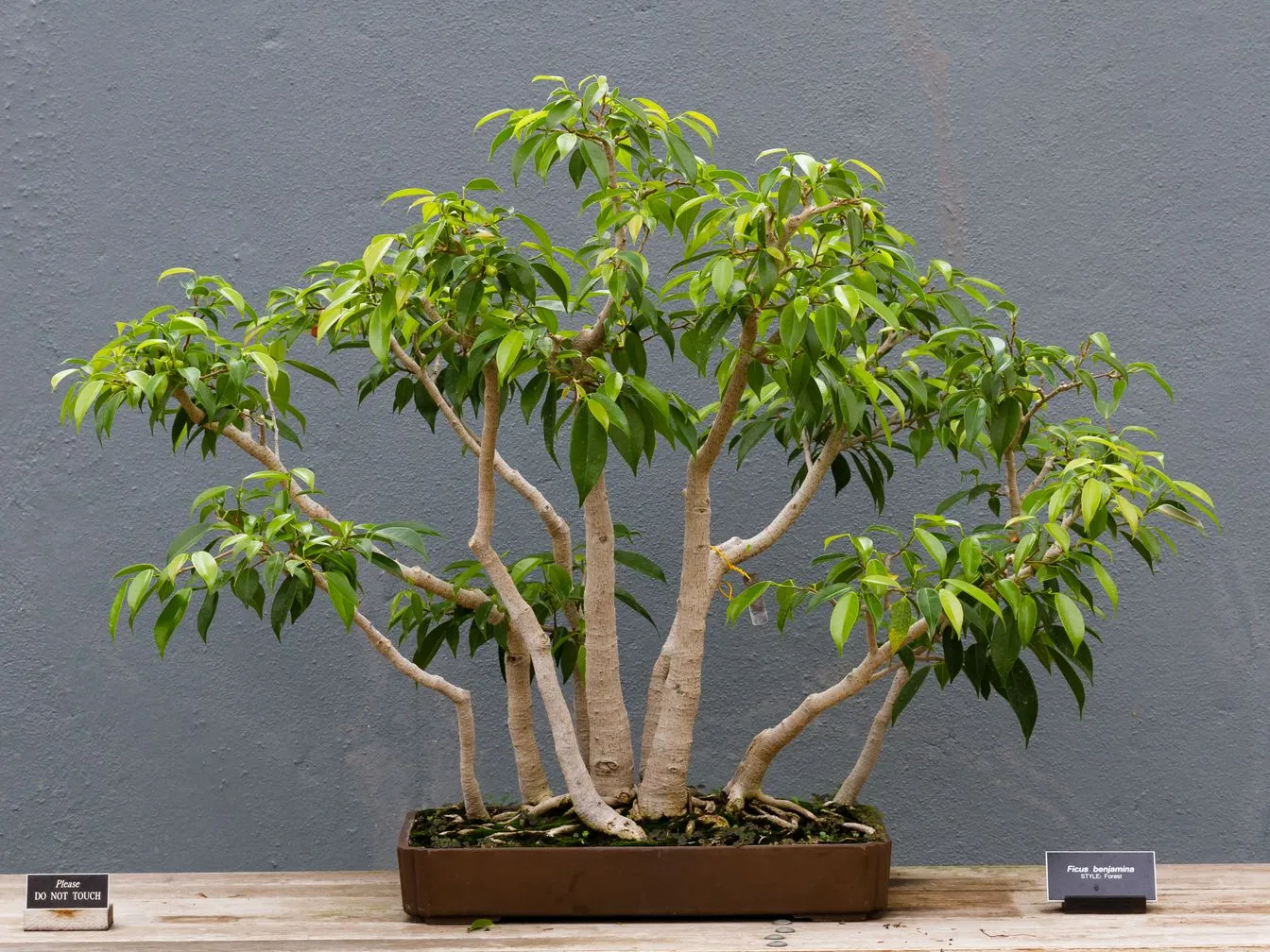
The weeping fig (Ficus benjamina) is a graceful indoor tree with small, glossy leaves on arching branches. It is also famous for dropping leaves the moment something changes. Keep its conditions steady and it will reward you with years of growth.
At a glance
- LightBright, indirect light
- WateringEvery 7–14 days in summer, every 14–21 days in winter — when the top few cm of soil are dry
- HumidityNormal room humidity
- Temperature15–29 °C (59–84 °F)
- DifficultyModerate
- PetsToxic to cats and dogs
- Common problemsYellow leaves · Brown tips and edges
Intervals are typical indoor ranges. Your light, pot and season change them — always check the soil first. Pet safety per the ASPCA plant lists.
Light
Bright, indirect light is best. A spot near an east or west window works well, and a few hours of gentle morning sun are fine. Variegated varieties need more light to hold their pattern. In a dim corner it thins out and sheds leaves.
Not sure a spot is bright enough? Flora's Spot Finder measures the light with your phone's camera and shows which spots suit which plants. Get the app
Watering
Water when the top 2 to 3 cm of soil are dry: about every 1 to 2 weeks in summer and every 2 to 3 weeks in winter. Water thoroughly, empty the saucer afterwards, and never let the roots sit in water. Always check the soil instead of following a calendar.
Flora reminds you when it's time to water, learns from what you actually do and adjusts through the seasons. Skip, snooze or switch on vacation mode. Get the app
Moving it and leaf drop
The weeping fig reacts to change. A new spot, a cold draft, a heater, a repotting or a sudden swing in watering can all make it drop many leaves within days. Do not panic and do not drown it: keep the light and the watering steady and it grows new leaves. Pick one good spot and leave it there.
Soil and repotting
Use a well-draining potting mix with some perlite or bark. Repot every two years in spring, into a pot only a little larger. Prune in spring to keep the shape. The sap is milky and can irritate skin, so wear gloves.
Humidity and temperature
Normal room humidity is fine, a little more is better in winter when the air is dry. Keep it between 15 and 29 °C and away from radiators and cold drafts.
Common problems
- Dropping leaves: a move, a draft, or too little light. Keep conditions steady.
- Yellow leaves: usually overwatering, or soil that stays wet.
- Brown, crispy leaf edges: dry air or too little water.
- Sticky leaves or brown bumps: scale insects.
- Fine webs and speckled leaves: spider mites, common in dry heated rooms.
Is your weeping fig healthy? Photograph it with Flora: you get a health check and a watering schedule that adapts to your light, your season and your weather. Get the app
Is a weeping fig safe for pets?
No. The sap of the weeping fig is irritating and it is listed as toxic to cats and dogs. It can cause drooling, mouth irritation and vomiting. Keep it out of reach.