Poinsettia care
Euphorbia pulcherrima
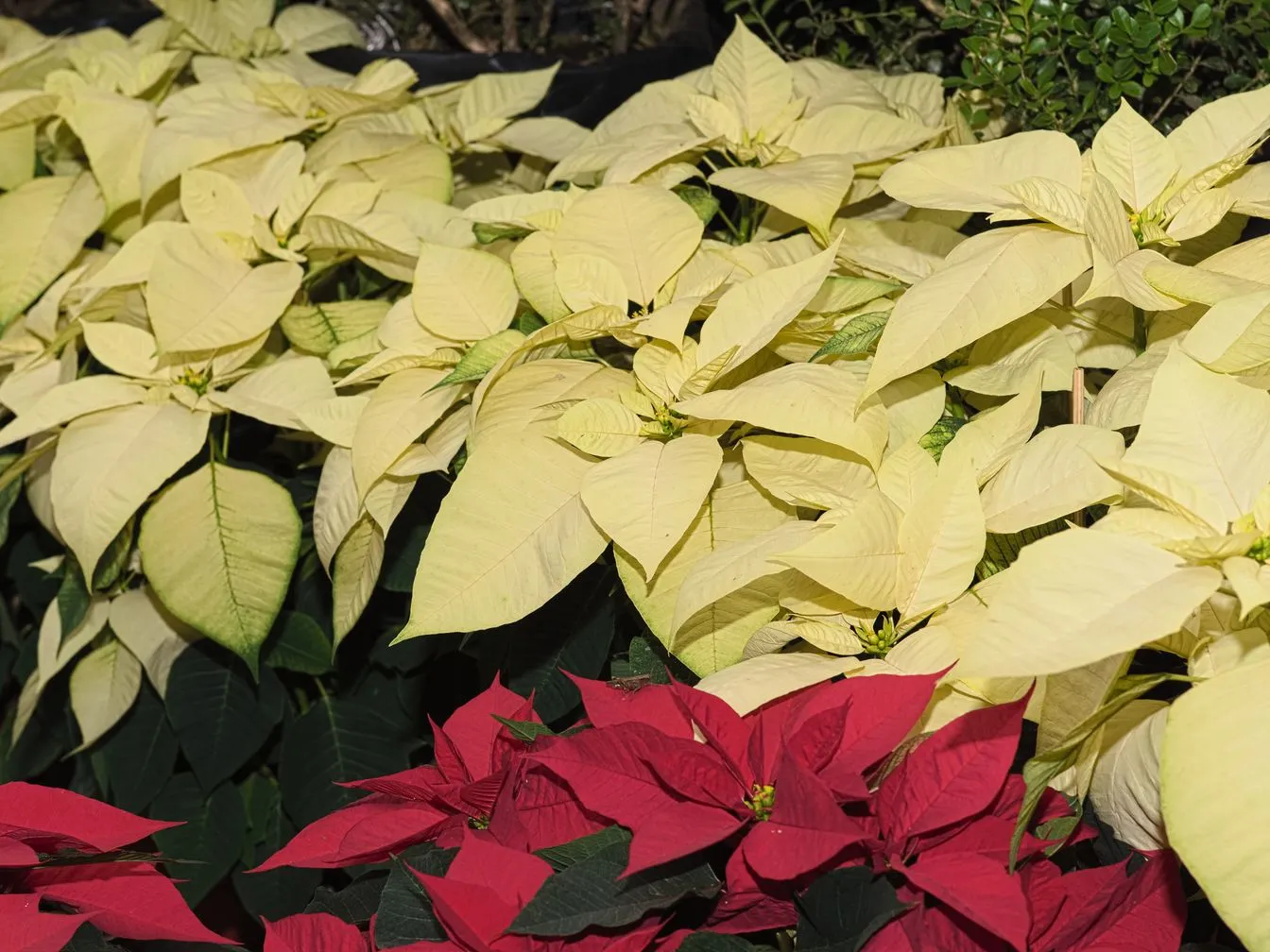
The poinsettia (Euphorbia pulcherrima) is the Christmas plant with red, pink or white bracts. It is sensitive to cold and overwatering, but easy to keep looking good through winter. It is mildly toxic to cats and dogs, not deadly as the old myth claims.
At a glance
- LightBright, indirect light
- WateringEvery 7–10 days in summer, every 10–14 days in winter — when the top few cm of soil are dry
- HumidityNormal room humidity
- Temperature15–27 °C (59–81 °F)
- DifficultyModerate
- PetsToxic to cats and dogs
- Common problemsYellow leaves · Drooping leaves
Intervals are typical indoor ranges. Your light, pot and season change them — always check the soil first. Pet safety per the ASPCA plant lists.
Light
Bright, indirect light for as many hours as possible. A spot near a bright window, away from the glass in frosty weather, keeps the colour for months.
Not sure a spot is bright enough? Flora's Spot Finder measures the light with your phone's camera and shows which spots suit which plants. Get the app
Watering
Water when the top 2–3 cm of soil are dry, usually every 7 to 10 days; less in winter if the room is cool. Always empty the decorative foil or saucer: poinsettias hate standing in water, and root rot is what kills most of them.
Flora reminds you when it's time to water, learns from what you actually do and adjusts through the seasons. Skip, snooze or switch on vacation mode. Get the app
Soil and repotting
Use a standard, well-draining potting mix in a pot with drainage holes. Repot in spring if you keep it for another year.
Humidity and temperature
Keep it between about 15 °C and 27 °C. Cold drafts, a chilly shop-to-home trip and hot radiators all make it drop leaves, so wrap it for transport and place it away from doors and heaters.
Keeping it after Christmas
Water less and let it rest in spring, cut it back to about 10 cm, repot and put it in a bright place. To get colour again, it needs about 14 hours of complete darkness every night, from early October for 8 to 10 weeks, with bright light by day.
Common problems
- Dropping leaves: a cold draught, overwatering or a dry root ball.
- Yellow leaves: too much water.
- Drooping, wilted plant: thirsty or roots rotted.
- Fading bracts: too warm, or not enough light.
- White fluffy spots: mealybugs or whitefly; treat early.
Is your poinsettia healthy? Photograph it with Flora: you get a health check and a watering schedule that adapts to your light, your season and your weather. Get the app
Is a poinsettia safe for pets?
No. It is far less dangerous than its reputation, but the ASPCA lists poinsettia as toxic to cats and dogs while noting it is "generally over-rated in toxicity": the milky sap irritates the mouth and stomach and can cause drooling and vomiting. Keep it out of reach and call your vet if a pet has eaten a lot.