Amaryllis care
Hippeastrum spp.
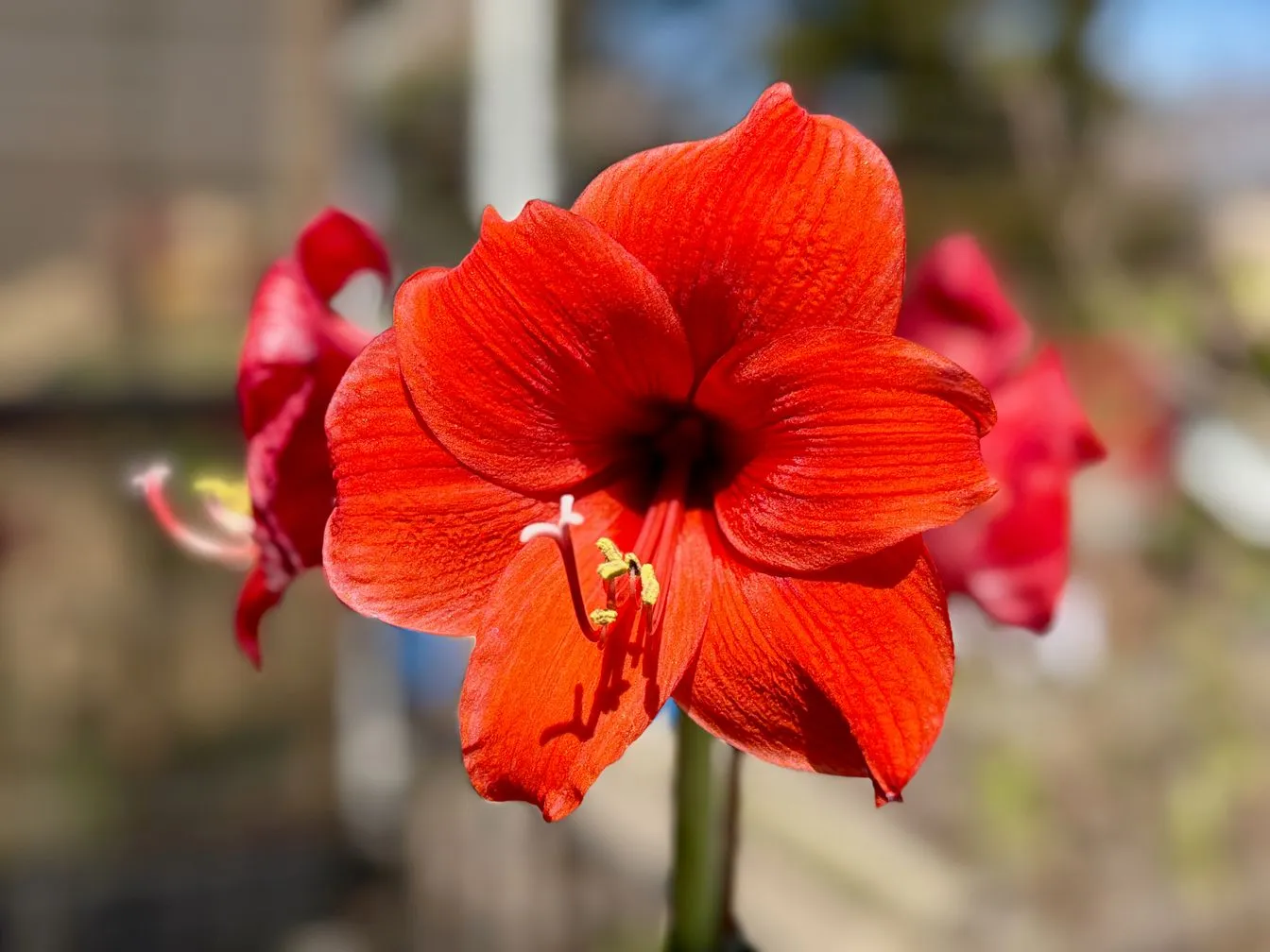
The amaryllis (Hippeastrum) is a big bulb that sends up tall stems with huge trumpet flowers in winter. It is easy to grow and to flower again, but all parts, especially the bulb, are toxic to cats and dogs.
At a glance
- LightBright, indirect light
- WateringEvery 7–10 days in summer, every 7–10 days in winter — when the top few cm of soil are dry
- HumidityDry air is fine
- Temperature15–27 °C (59–81 °F)
- DifficultyModerate
- PetsToxic to cats and dogs
- Common problemsYellow leaves · Brown tips and edges · Drooping leaves
Intervals are typical indoor ranges. Your light, pot and season change them — always check the soil first. Pet safety per the ASPCA plant lists.
Light
Bright light while it flowers keeps the stems sturdy and short. Indirect light makes the blooms last longer; turn the pot every few days so the stem grows straight.
Not sure a spot is bright enough? Flora's Spot Finder measures the light with your phone's camera and shows which spots suit which plants. Get the app
Watering
Water sparingly until the stem is a few centimetres tall, then when the top 2–3 cm of soil are dry, roughly every 7 to 10 days. Never let the bulb sit in water, and never water onto the bulb itself.
Flora reminds you when it's time to water, learns from what you actually do and adjusts through the seasons. Skip, snooze or switch on vacation mode. Get the app
Soil and repotting
Plant the bulb in a snug pot, only a few centimetres wider than the bulb, with the top third above the soil, in well-draining potting mix. Repot every three to four years.
Humidity and temperature
Normal room humidity is fine. Warmth (about 20–25 °C) starts growth; after flowering, cooler rooms keep the blooms longer. Stay between about 15 °C and 27 °C.
Reblooming
After flowering cut the stalk off near the bulb, keep the leaves, put the plant in a bright spot and feed it through summer. In early autumn stop watering, let the leaves die back and keep the bulb dry and cool (around 10–13 °C) for 8 to 10 weeks. Then bring it into a warm, bright spot, refresh the top layer of soil (repot only every three to four years) and start watering again.
Common problems
- Floppy, leaning stems: not enough light; support with a stick.
- Leaves but no flowers: the bulb didn't get enough light, feeding or rest.
- Soft, mouldy bulb: overwatering.
- Yellow leaves: overwatering or natural dying back after summer.
- Brown leaf tips: dry air or irregular watering.
Is your amaryllis healthy? Photograph it with Flora: you get a health check and a watering schedule that adapts to your light, your season and your weather. Get the app
Is an amaryllis safe for pets?
No. The ASPCA lists amaryllis as toxic to cats and dogs: eating it can cause vomiting, drooling, diarrhea, abdominal pain and tremors. The bulb is the most toxic part. Keep it out of reach and call your vet if a pet has eaten some.