
String of pearls care
Curio rowleyanus
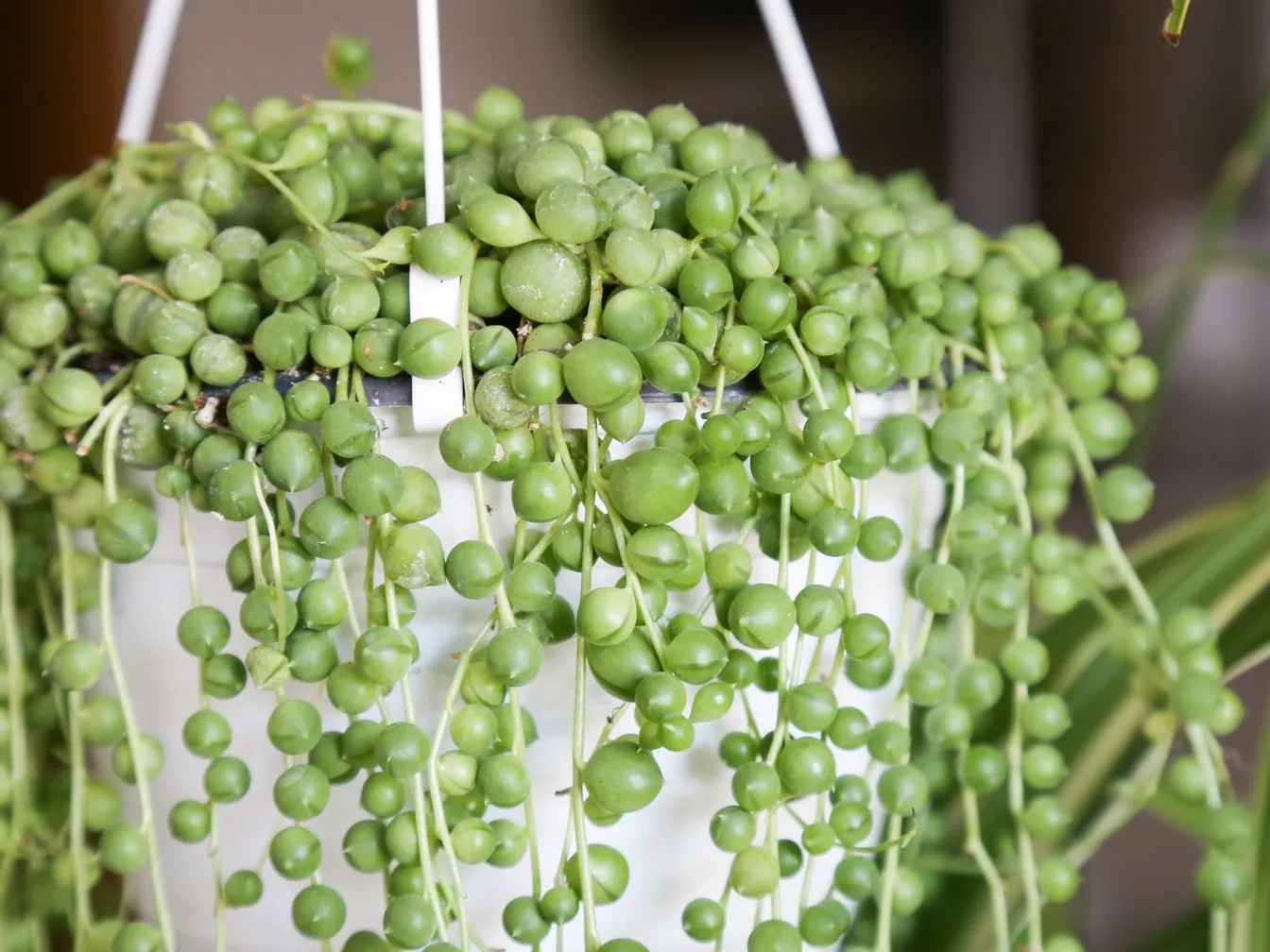
_(31772262164).jpg)
At a glance
- Light
- Bright, indirect light
- Watering
- Every 10–14 days in summer, every 21–28 days in winter — when the soil is dry all the way through
- Humidity
- Dry air is fine
- Temperature
- 10–27 °C (50–81 °F)
- Difficulty
- Moderate
- Pets
- Toxic to cats and dogs
Intervals are typical indoor ranges. Your light, pot and season change them — always check the soil first. Pet safety per the ASPCA plant lists.
The string of pearls (Curio rowleyanus, formerly Senecio rowleyanus) is a trailing succulent with bead-shaped leaves. It looks delicate but mostly needs two things: plenty of light and careful watering.
Light
Bright, indirect light with some gentle direct sun, ideally morning sun. In low light the strands thin out and the pearls spread far apart.
Watering
Water when the soil is dry almost all the way through — usually every 10 to 14 days in summer and every three to four weeks in winter. The pearls tell you: firm and round is fine, slightly wrinkled means water now.
Soil and repotting
Use cactus soil in a shallow pot with a drainage hole; terracotta is ideal. The roots are shallow, so a wide, shallow pot is better than a deep one. Keep the crown slightly above the soil line to prevent rot.
Humidity and temperature
Dry air is fine. Keep it between 10 and 27 °C; a cool winter with little water is normal.
Propagating
Lay a cut strand on dry soil or push the cut end into it. Roots form at the nodes within a few weeks.
Common problems
- Shrivelled, flat pearls: thirst — or, if the stems near the soil are brown and soft, root rot.
- Mushy, translucent pearls: overwatering.
- Thin, bare strands: too little light.
- Dying off from the top of the pot: rot at the crown. Save healthy strands as cuttings.
Is a string of pearls safe for pets?
No. String of pearls is toxic to cats and dogs and can cause vomiting, diarrhea and lethargy. Hang it well out of reach.