Anthurium care
Anthurium andraeanum
Anthurium (Anthurium andraeanum), the flamingo flower, is grown for glossy red, pink or white flower spathes that last for months. It likes warmth and humidity and is toxic to cats and dogs.
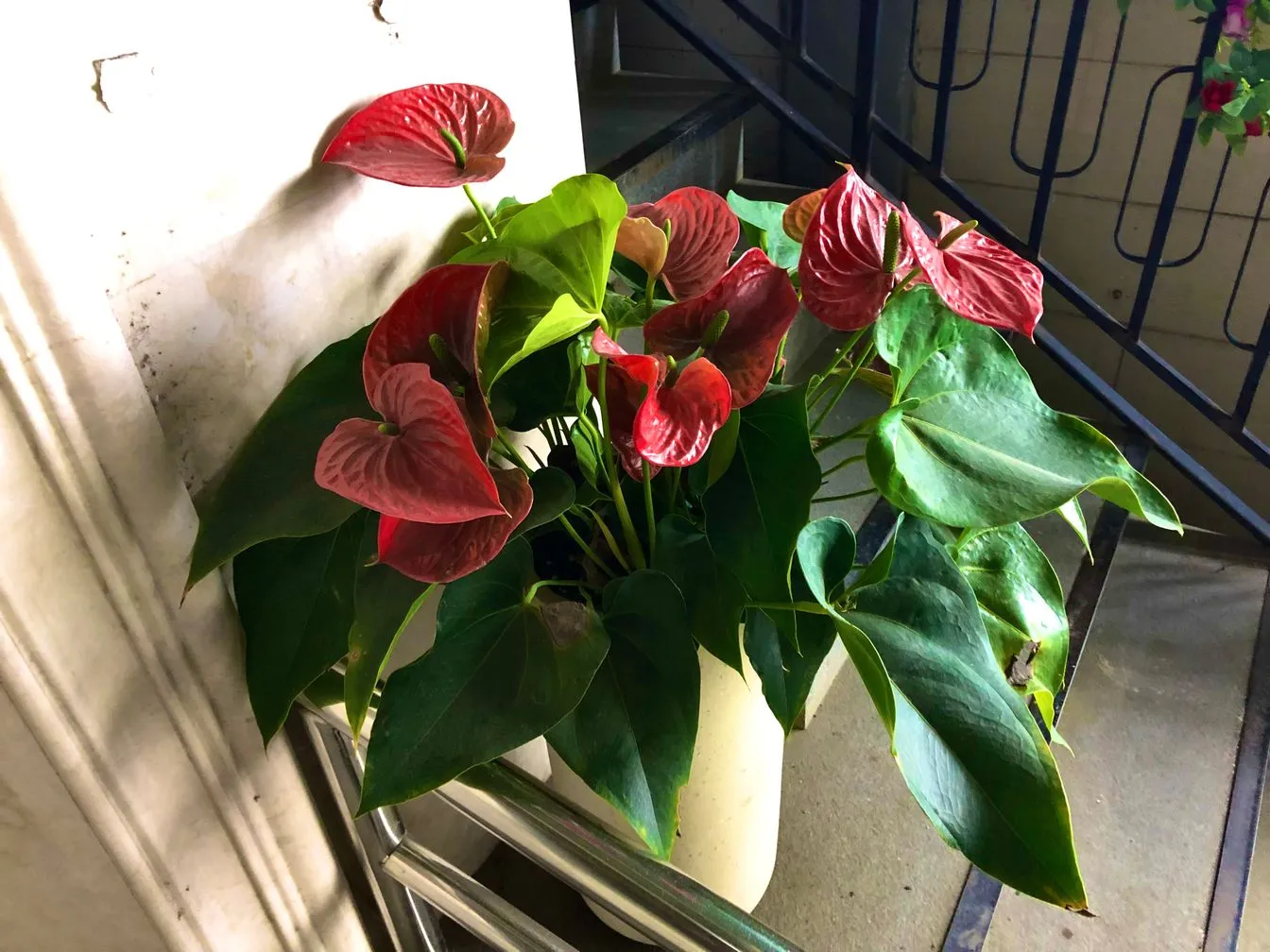
At a glance
- LightBright, indirect light
- WateringEvery 7–10 days in summer, every 14–21 days in winter — when the top few cm of soil are dry
- HumidityLikes high humidity
- Temperature16–29 °C (61–84 °F)
- DifficultyModerate
- PetsToxic to cats and dogs
- Common problemsYellow leaves · Brown tips and edges · Drooping leaves
Intervals are typical indoor ranges. Your light, pot and season change them — always check the soil first. Pet safety per the ASPCA plant lists.
Light
Bright, indirect light keeps it flowering. In low light it makes leaves but few blooms. Direct sun scorches both leaves and flowers.
Not sure a spot is bright enough? Flora's Spot Finder measures the light with your phone's camera and shows which spots suit which plants. Get the app
Watering
Water when the top 2–3 cm of soil are dry, usually every 7 to 10 days in summer and every two to three weeks in winter. Use lukewarm water, let the pot drain fully and never leave it standing in a full saucer; the roots rot quickly if they stay wet.
Flora reminds you when it's time to water, learns from what you actually do and adjusts through the seasons. Skip, snooze or switch on vacation mode. Get the app
Soil and repotting
Anthuriums are epiphytes, so they want a very loose mix: potting soil blended with orchid bark and perlite, in a pot with drainage. Repot every two years in spring.
Humidity and temperature
It prefers high humidity — a bright bathroom or a pebble tray helps — and temperatures between about 16 °C and 29 °C. Cold drafts and temperatures under 15 °C damage it.
Getting new flowers
Give it the brightest spot that avoids direct sun, feed lightly in the growing season and cut each faded flower off at the base. A plant that makes only leaves almost always needs more light.
Common problems
- Yellow leaves: overwatering, or old leaves dropping naturally.
- Brown leaf edges and tips: dry air or salt build-up from feeding.
- Brown flower spathes: old flowers reaching the end; cut them off.
- No flowers: not enough light.
- Drooping leaves: thirsty, or roots rotted from sitting wet.
Is your anthurium healthy? Photograph it with Flora: you get a health check and a watering schedule that adapts to your light, your season and your weather. Get the app
Is an anthurium safe for pets?
No. Anthurium is listed as toxic to cats and dogs by the ASPCA: the sap irritates the mouth and causes drooling and vomiting. Keep it out of reach and call your vet if a pet has chewed it.