
Rubber plant care
Ficus elastica
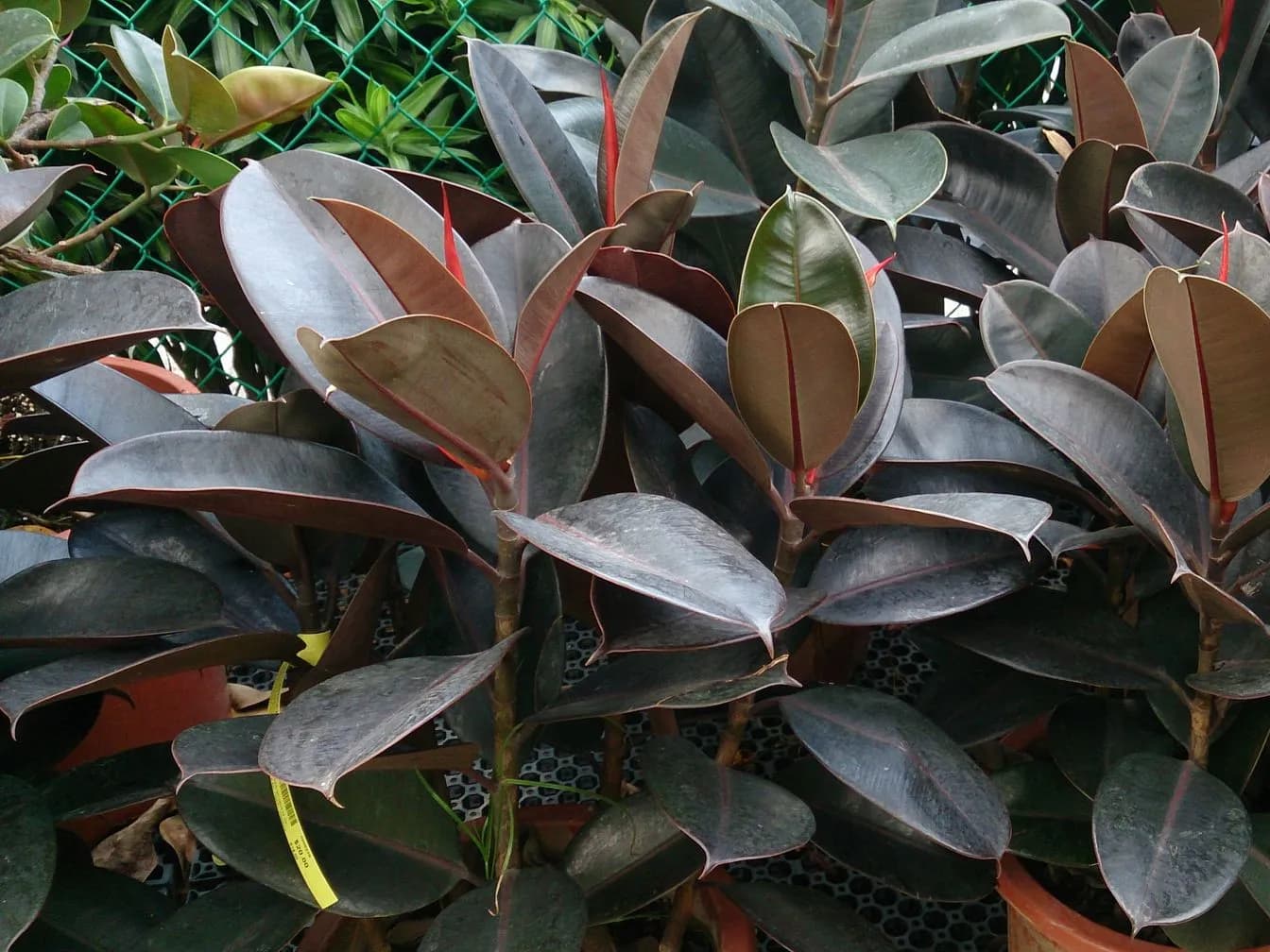
_1.jpg)
At a glance
- Light
- Bright, indirect light
- Watering
- Every 7–14 days in summer, every 14–21 days in winter — when the top few cm of soil are dry
- Humidity
- Normal room humidity
- Temperature
- 15–29 °C (59–84 °F)
- Difficulty
- Easy
- Pets
- Toxic to cats and dogs
Intervals are typical indoor ranges. Your light, pot and season change them — always check the soil first. Pet safety per the ASPCA plant lists.
The rubber plant (Ficus elastica) grows glossy, leathery leaves and can become an impressive indoor tree. It is easier than its cousin the fiddle leaf fig, but it shares the family's dislike of dim corners and soggy soil.
Light
Bright, indirect light is best, and dark-leaved varieties can take some direct morning sun. Variegated varieties need even more light to keep their colours. In low light it gets leggy and drops lower leaves.
Watering
Water when the top 5 cm of soil are dry — about every 1 to 2 weeks in summer and every 2 to 3 weeks in winter. Empty the saucer after watering.
Soil and repotting
Use a well-draining potting mix with some perlite or bark. Repot every one to two years in spring. To make it bushier, cut the top stem just above a leaf in spring; new branches form below the cut. The sap is milky and sticky — wear gloves.
Humidity and temperature
Normal room humidity is fine. Keep it between 15 and 29 °C and away from cold drafts. Wipe the big leaves with a damp cloth now and then so they can take in light.
Common problems
- Dropping lower leaves: too little light, overwatering or a sudden move.
- Yellow leaves: usually overwatering.
- Drooping leaves: thirst, or a cold draft.
- Leggy growth: not enough light. Move it closer to a window and prune.
Is a rubber plant safe for pets?
No. The rubber plant's sap is irritating, and it is listed as toxic to cats and dogs, causing mouth irritation and vomiting.