
Dragon tree care
Dracaena marginata
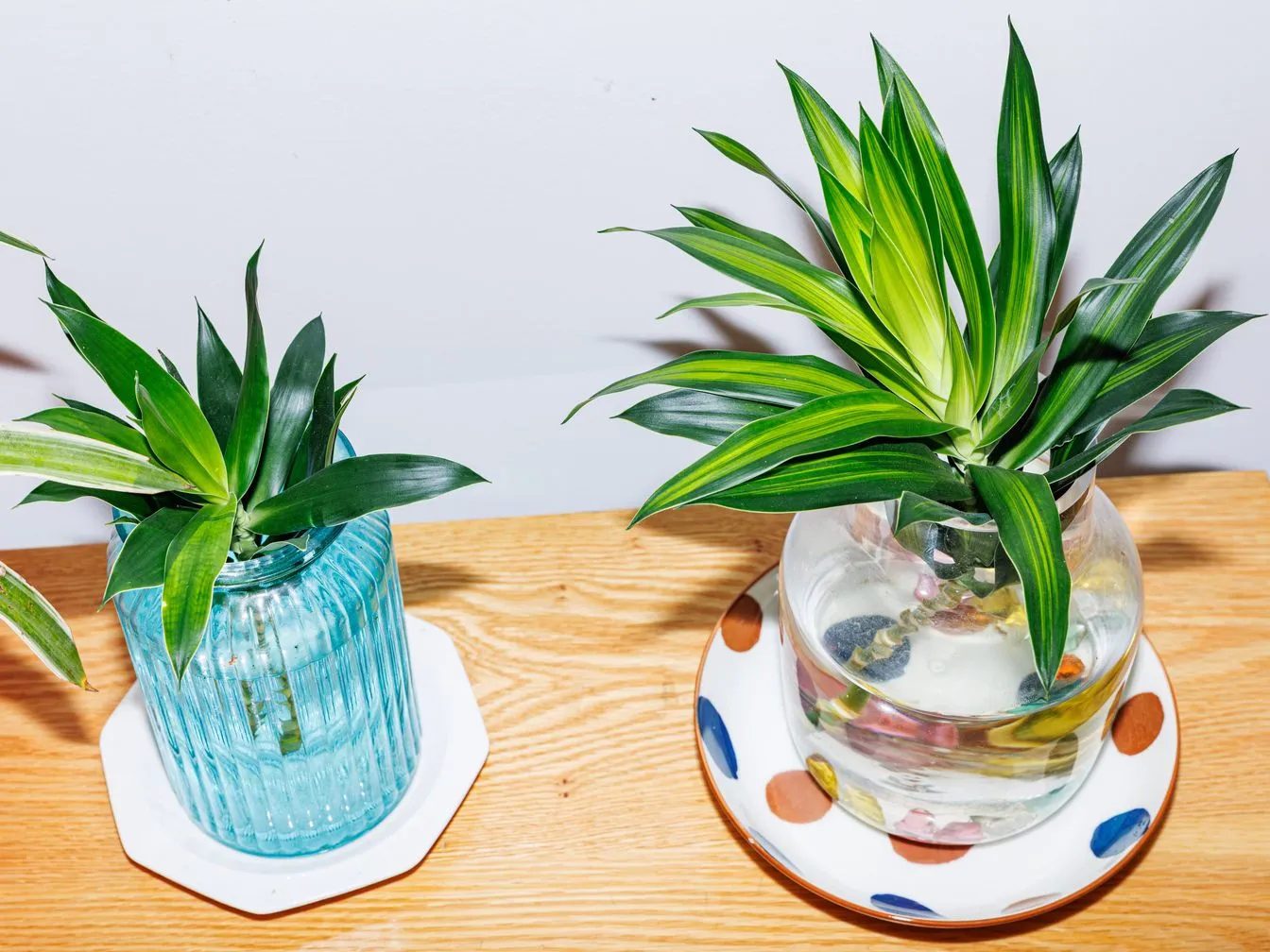
.jpg)
At a glance
- Light
- Bright, indirect light · tolerates low light
- Watering
- Every 10–14 days in summer, every 21–28 days in winter — when the top few cm of soil are dry
- Humidity
- Normal room humidity
- Temperature
- 15–29 °C (59–84 °F)
- Difficulty
- Easy
- Pets
- Toxic to cats and dogs
Intervals are typical indoor ranges. Your light, pot and season change them — always check the soil first. Pet safety per the ASPCA plant lists.
The dragon tree (Dracaena marginata) has slim, red-edged leaves on woody canes. It is an easy, architectural plant that tolerates a range of conditions.
Light
Bright, indirect light keeps the leaves colourful and the growth compact. It tolerates medium and low light, but grows slowly and leggy there. Avoid hot direct sun.
Watering
Water when the top half of the soil is dry — usually every 10 to 14 days in summer and every three to four weeks in winter. Dracaenas are sensitive to overwatering and to fluoride in tap water.
Soil and repotting
Use a well-draining potting mix. Repot every two to three years in spring. A leggy dragon tree can be cut back — new shoots grow just below the cut.
Humidity and temperature
Average humidity is fine. Keep it between 15 and 29 °C.
Common problems
- Brown leaf tips: fluoride or salts in tap water, or dry air. Use filtered or rain water.
- Yellow lower leaves dropping: normal as the cane grows; many at once means overwatering.
- Soft, dark cane base: root rot. Let it dry out and check the roots.
- Pale leaves: too little light.
Is a dragon tree safe for pets?
No. Dracaena is toxic to cats and dogs; it contains saponins and can cause vomiting, drooling and, in cats, dilated pupils.