
Monstera care
Monstera deliciosa
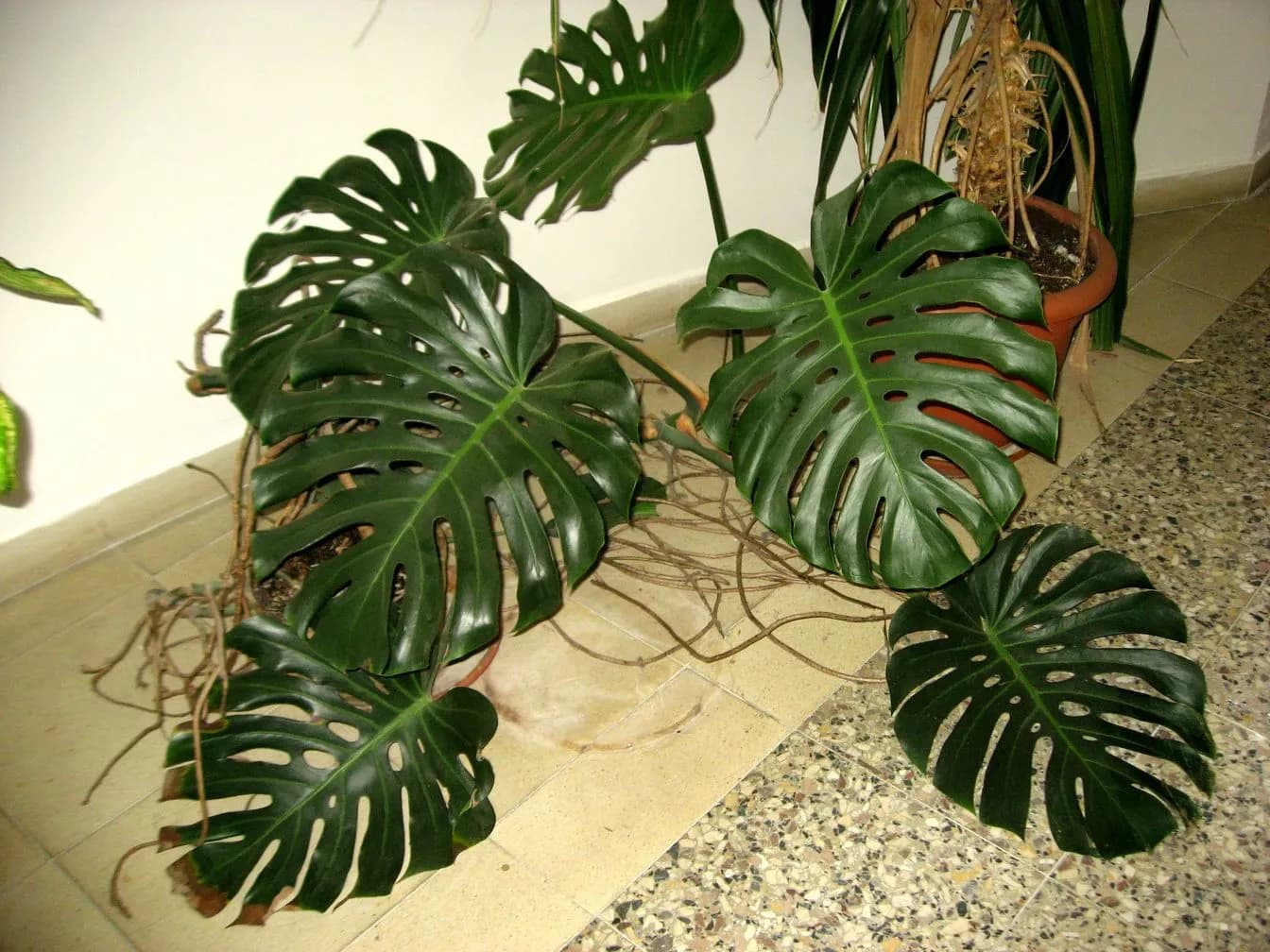

At a glance
- Light
- Bright, indirect light · tolerates low light
- Watering
- Every 7–10 days in summer, every 14–21 days in winter — when the top few cm of soil are dry
- Humidity
- Normal room humidity
- Temperature
- 15–29 °C (59–84 °F)
- Difficulty
- Easy
- Pets
- Toxic to cats and dogs
Intervals are typical indoor ranges. Your light, pot and season change them — always check the soil first. Pet safety per the ASPCA plant lists.
The Monstera deliciosa — the Swiss cheese plant — is one of the most forgiving statement plants you can own. Most problems come down to two things: too much water, or too little light.
Light
Bright, indirect light is ideal: near an east-facing window, or a few steps back from a south or west one. A Monstera survives in medium light, but it grows slowly and new leaves come in smaller and with fewer splits. Direct midday sun through glass scorches the leaves.
Watering
Water when the top 5 cm of soil are dry — in summer that is usually every 7 to 10 days, in winter every two to three weeks. Water thoroughly until it drains, then empty the saucer. Overwatering is the most common way to lose a Monstera: the first signs are yellowing lower leaves and soil that never quite dries.
Soil and repotting
Use a chunky, well-draining mix: potting soil with a third perlite or orchid bark. Repot every one to two years in spring, one pot size up, when roots circle the bottom or grow out of the drainage holes. As it climbs, give it a moss pole — supported Monsteras grow larger, more split leaves.
Humidity and temperature
Normal room humidity is fine; higher humidity gives bigger leaves. Keep it between 15 and 29 °C and away from cold drafts and radiators.
Common problems
- Yellow lower leaves, wet soil: overwatering. Let it dry out and water less often.
- Brown, crispy edges: dry air or irregular watering.
- No splits in new leaves: not enough light, or the plant is still young.
- Drooping with dry soil: thirst. Water thoroughly; it recovers within a day.
Is a Monstera safe for pets?
No. Monstera contains calcium oxalate crystals and is toxic to cats and dogs; chewing causes mouth irritation, drooling and vomiting. Keep it out of reach of pets that nibble plants.
In-depth guide: Monstera Care: Everything You Need to Know to Keep Yours Thriving