Pothos care
Epipremnum aureum
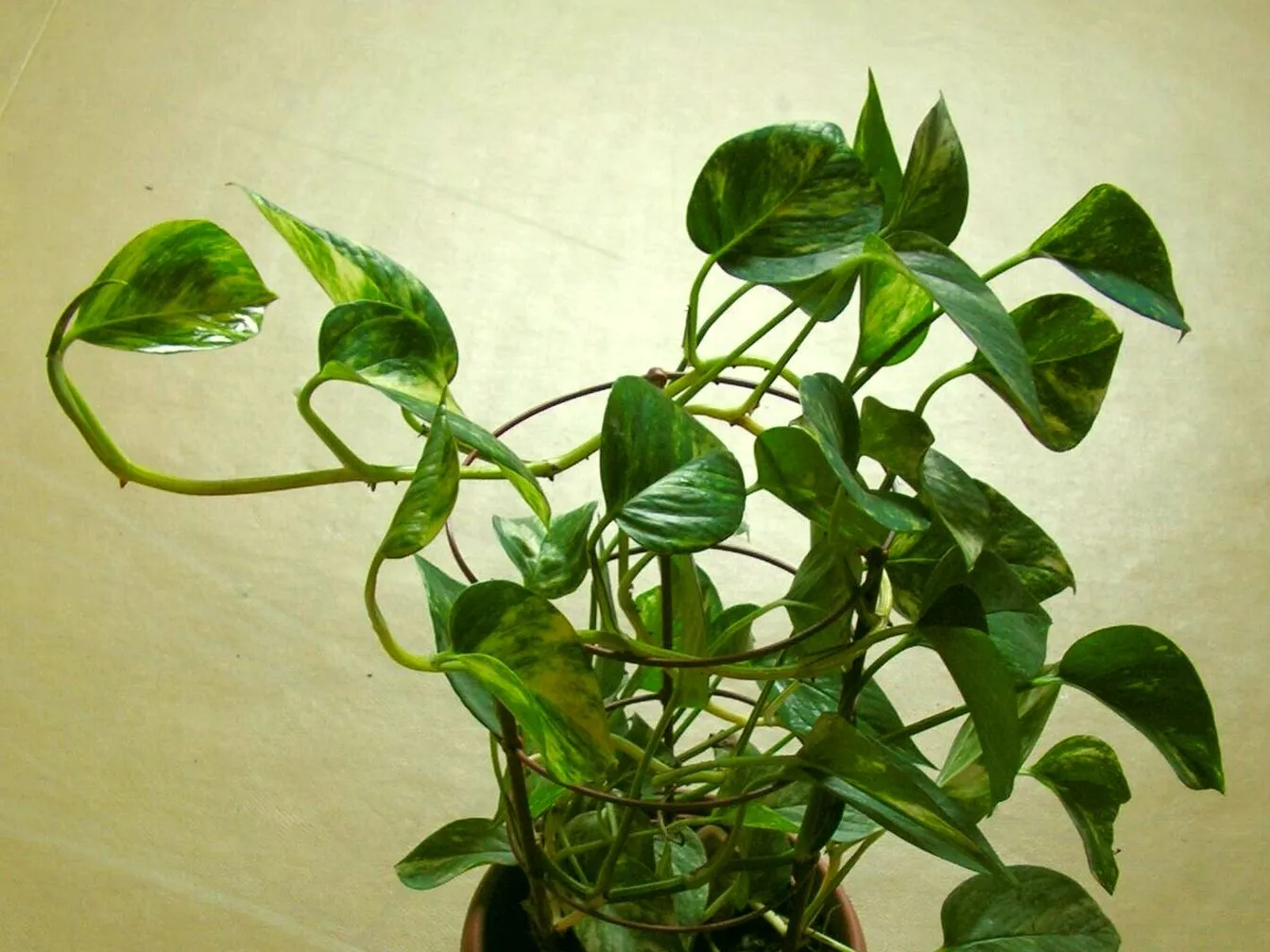
Pothos (Epipremnum aureum), also called devil's ivy or golden pothos, is one of the easiest houseplants there is. It trails or climbs, grows fast, and tells you clearly when something is off.
At a glance
- LightMedium, indirect light · tolerates low light
- WateringEvery 7–10 days in summer, every 14–21 days in winter — when the top few cm of soil are dry
- HumidityNormal room humidity
- Temperature15–30 °C (59–86 °F)
- DifficultyEasy
- PetsToxic to cats and dogs
- Common problemsYellow leaves · Brown tips and edges · Leggy growth · Thrips
Intervals are typical indoor ranges. Your light, pot and season change them — always check the soil first. Pet safety per the ASPCA plant lists.
Light
Medium to bright indirect light keeps it fast-growing and well-variegated. It tolerates low light, but variegated types turn greener and the vines get long and bare between leaves. Avoid strong direct sun, which bleaches and scorches the leaves.
Not sure a spot is bright enough? Flora's Spot Finder measures the light with your phone's camera and shows which spots suit which plants. Get the app
Watering
Water when the top few centimetres of soil are dry — typically every 7 to 10 days in summer and every two to three weeks in winter. Slightly drooping leaves are its way of asking for water; they perk up within hours.
Flora reminds you when it's time to water, learns from what you actually do and adjusts through the seasons. Skip, snooze or switch on vacation mode. Get the app
Soil and repotting
Any good potting soil with some perlite works. Repot in spring when roots fill the pot. For a bushier plant, trim long vines just above a leaf node — the cuttings root easily in a glass of water.
Humidity and temperature
Normal room humidity is fine. Keep it between 15 and 30 °C and away from cold drafts.
Common problems
- Yellow leaves: most often overwatering; also too little light or natural ageing of old leaves. See our guide to pothos yellow leaves.
- Brown, crispy spots: underwatering or too much direct sun.
- Long, bare vines: not enough light. Move it closer to a window and trim.
- Losing variegation: too little light.
Is your pothos healthy? Photograph it with Flora: you get a health check and a watering schedule that adapts to your light, your season and your weather. Get the app
Is pothos safe for pets?
No. Pothos contains calcium oxalate crystals and is toxic to cats and dogs, causing mouth irritation, drooling and vomiting. Hanging it out of reach is the easiest fix.