
Peace lily care
Spathiphyllum wallisii
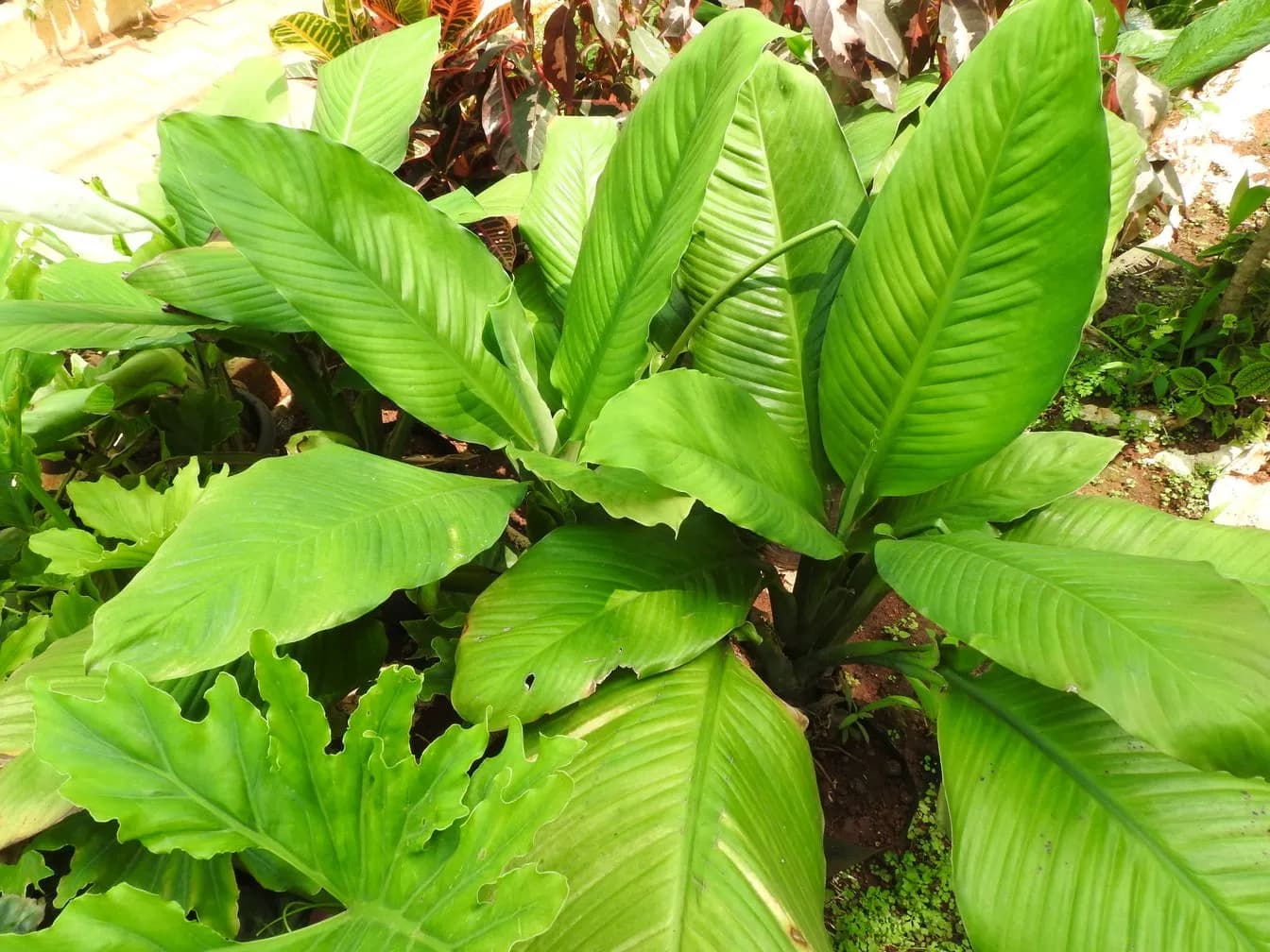

At a glance
- Light
- Medium, indirect light · tolerates low light
- Watering
- Every 5–7 days in summer, every 10–14 days in winter — when the top few cm of soil are dry
- Humidity
- Likes high humidity
- Temperature
- 16–29 °C (61–84 °F)
- Difficulty
- Easy
- Pets
- Toxic to cats and dogs
Intervals are typical indoor ranges. Your light, pot and season change them — always check the soil first. Pet safety per the ASPCA plant lists.
The peace lily (Spathiphyllum) is a leafy plant with white flowers that is unusually good at telling you what it needs: when it is thirsty, the whole plant droops.
Light
Medium, indirect light is ideal. It tolerates low light — one reason it is so popular in offices — but it flowers far less there. Direct sun burns the leaves.
Watering
Peace lilies like more water than most houseplants. Water when the top 2–3 cm of soil are dry — often every 5 to 7 days in summer and every 10 to 14 days in winter. A dramatic droop means it is overdue; it recovers within hours of watering. Don't let it sit in standing water.
Soil and repotting
Use a rich, moisture-holding potting soil with some perlite for drainage. Repot every year or two in spring when the roots fill the pot.
Humidity and temperature
It likes humid air: brown leaf tips are often a sign the air is too dry. A spot in a bathroom or kitchen with enough light works well. Keep it between 16 and 29 °C.
Getting it to bloom
More light is the main lever. Move it to a brighter spot (still out of direct sun) and feed lightly every four to six weeks in spring and summer. Cut spent flowers off at the base.
Common problems
- Whole plant droops: thirst. Water thoroughly.
- Brown leaf tips: dry air, or salts from tap water and fertiliser. Flush the soil occasionally.
- Yellow leaves: overwatering, or old leaves dying back naturally.
- No flowers: too little light.
Is a peace lily safe for pets?
No. Despite the name it is not a true lily, but it contains calcium oxalate crystals and is toxic to cats and dogs, causing mouth irritation, drooling and vomiting.