
Heartleaf philodendron care
Philodendron hederaceum

At a glance
- Light
- Medium, indirect light · tolerates low light
- Watering
- Every 7–10 days in summer, every 14–21 days in winter — when the top few cm of soil are dry
- Humidity
- Normal room humidity
- Temperature
- 15–29 °C (59–84 °F)
- Difficulty
- Easy
- Pets
- Toxic to cats and dogs
Intervals are typical indoor ranges. Your light, pot and season change them — always check the soil first. Pet safety per the ASPCA plant lists.
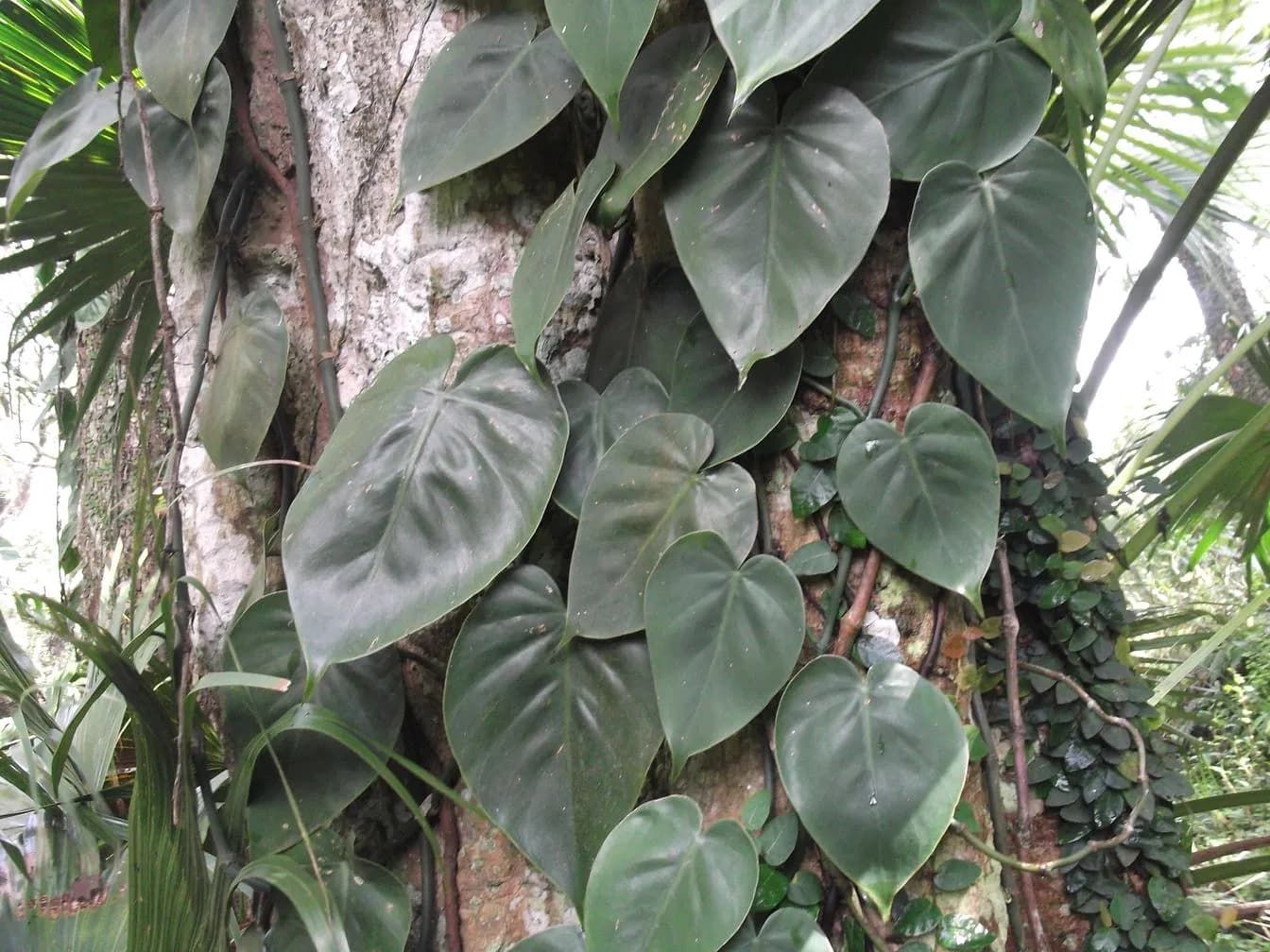
The heartleaf philodendron (Philodendron hederaceum) is a trailing plant with soft, heart-shaped leaves. It is as easy as pothos, grows quickly and looks great in a hanging basket or on a shelf.
Light
Medium to bright indirect light keeps it full and fast-growing. It tolerates low light, but the vines get long and bare between leaves. Avoid direct sun, which bleaches the leaves.
Watering
Water when the top few centimetres of soil are dry — about every 7 to 10 days in summer and every two to three weeks in winter. Drooping leaves mean it's thirsty.
Soil and repotting
Any light potting mix with perlite works. Repot in spring when roots fill the pot. Trim long vines just above a leaf to make the plant bushier; the cuttings root easily in water.
Humidity and temperature
Normal room humidity is fine; higher humidity gives larger leaves. Keep it between 15 and 29 °C.
Common problems
- Yellow leaves: most often overwatering; one yellow old leaf now and then is normal.
- Brown, dry leaf edges: too dry, or dry air.
- Small leaves, long bare vines: too little light.
- Curling leaves: thirst or too much sun.
Is a heartleaf philodendron safe for pets?
No. Philodendrons contain calcium oxalate crystals and are toxic to cats and dogs, causing mouth irritation, drooling and vomiting.