
Calathea care
Goeppertia (Calathea) spp.
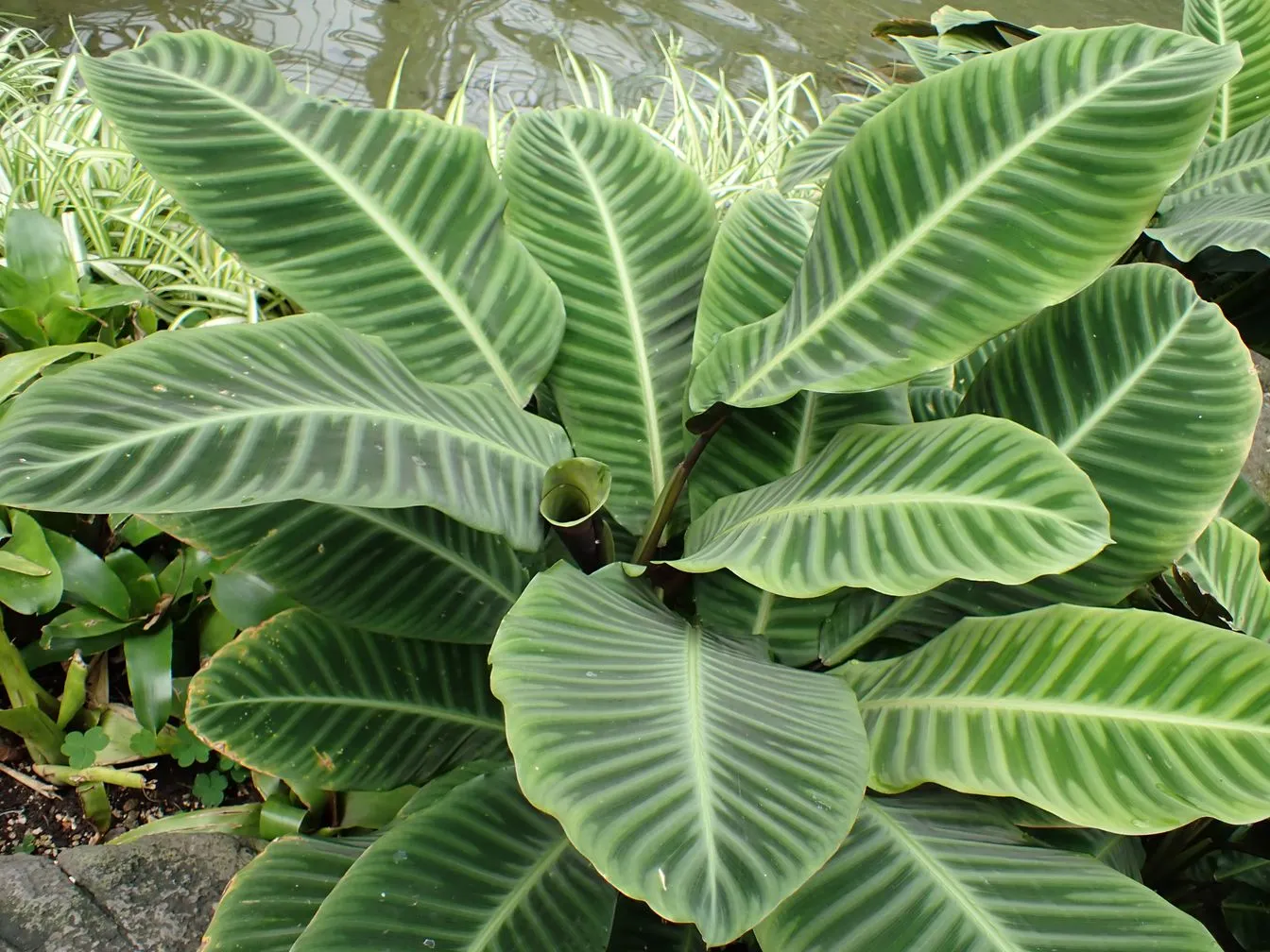

At a glance
- Light
- Medium, indirect light · tolerates low light
- Watering
- Every 5–7 days in summer, every 7–10 days in winter — keep the soil evenly moist, never soggy
- Humidity
- Likes high humidity
- Temperature
- 16–27 °C (61–81 °F)
- Difficulty
- Demanding
- Pets
- Non-toxic to cats and dogs
Intervals are typical indoor ranges. Your light, pot and season change them — always check the soil first. Pet safety per the ASPCA plant lists.
Calatheas (now botanically Goeppertia) are grown for their painted leaves, which fold up at night like hands in prayer. They are safe for pets but have a reputation for being fussy: they want steady moisture, humid air and soft water.
Light
Medium, indirect light — a few metres from a bright window, or behind a sheer curtain. Direct sun fades the patterns and burns the leaves. They tolerate low light better than bright sun.
Watering
Keep the soil lightly and evenly moist: water when the surface starts to feel dry, usually every 5 to 7 days in summer and every 7 to 10 days in winter. Calatheas react to hard tap water and fluoride with brown edges, so filtered, rain or left-out water helps.
Soil and repotting
Use a light, moisture-holding mix — potting soil with perlite and a little bark. Repot every year or two in spring.
Humidity and temperature
Humidity is what makes or breaks a calathea. Aim for 50% or more: group it with other plants, use a humidifier, or keep it in a bright bathroom. Keep it between 16 and 27 °C, away from drafts and radiators.
Common problems
- Crispy brown edges: dry air or hard water — the most common problem.
- Curling leaves: thirst or dry air; the leaves roll up to save water.
- Yellow lower leaves: overwatering or cold.
- Faded patterns: too much direct light.
Is a calathea safe for pets?
Yes. Calatheas are listed as non-toxic to cats and dogs.