
Parlor palm care
Chamaedorea elegans
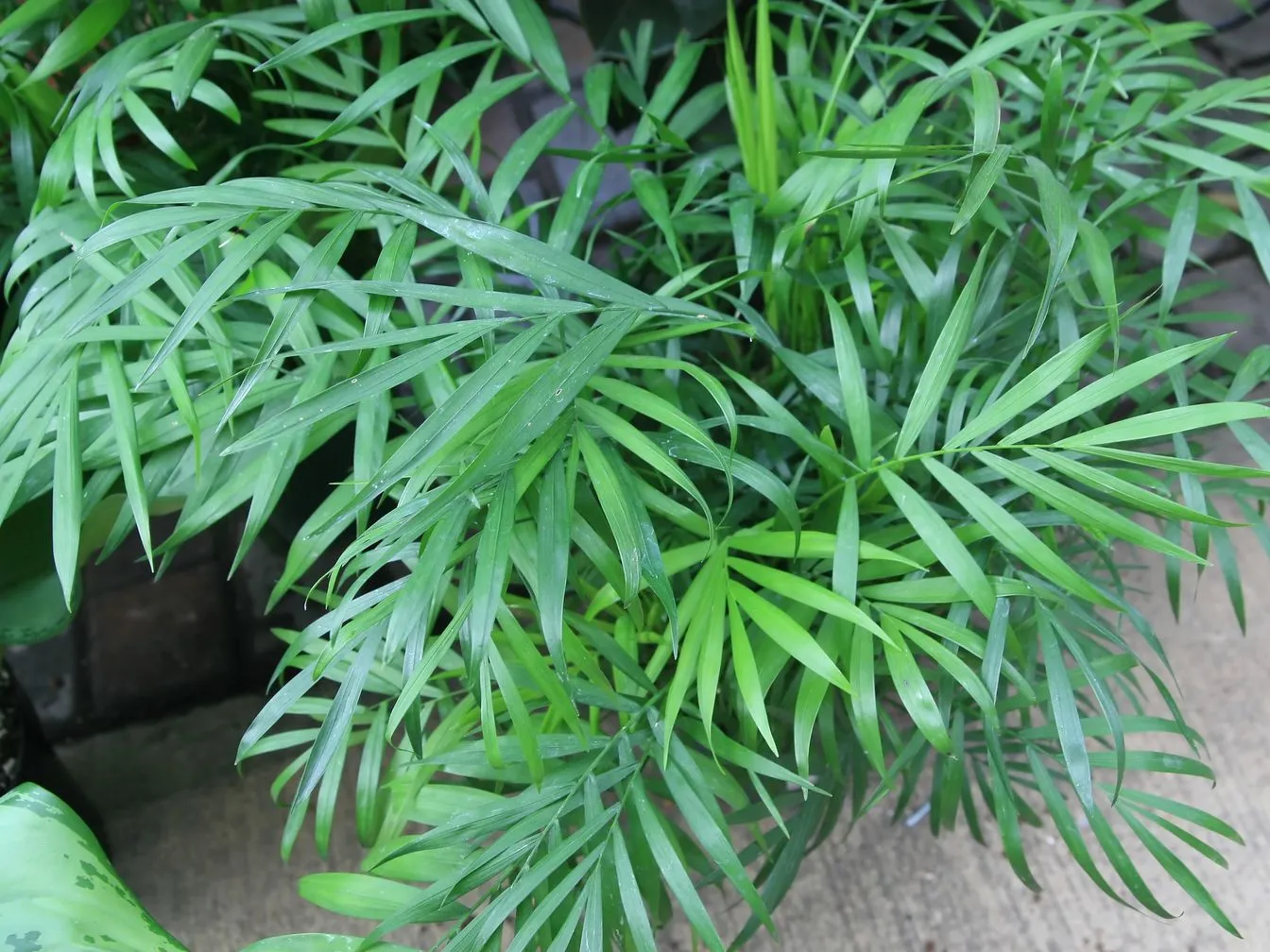

At a glance
- Light
- Medium, indirect light · tolerates low light
- Watering
- Every 7–10 days in summer, every 14–21 days in winter — when the top few cm of soil are dry
- Humidity
- Normal room humidity
- Temperature
- 16–27 °C (61–81 °F)
- Difficulty
- Easy
- Pets
- Non-toxic to cats and dogs
Intervals are typical indoor ranges. Your light, pot and season change them — always check the soil first. Pet safety per the ASPCA plant lists.
The parlor palm (Chamaedorea elegans) is a compact, slow-growing palm that copes with less light than most palms. It is safe for pets, which makes it a popular choice for homes with cats and dogs.
Light
Medium, indirect light is ideal. It tolerates low light well — a spot a few metres from a window is fine. Direct sun scorches the fronds.
Watering
Water when the top 2–3 cm of soil are dry — usually every 7 to 10 days in summer and every two to three weeks in winter. It dislikes both soggy soil and drying out completely.
Soil and repotting
Use a well-draining potting mix. Parlor palms like being slightly pot-bound; repot only every two to three years, and handle the roots gently.
Humidity and temperature
Average humidity works; higher humidity prevents brown tips. Keep it between 16 and 27 °C, away from cold drafts.
Common problems
- Brown frond tips: dry air or irregular watering. Trim the tips with clean scissors.
- Yellow fronds: overwatering, or old fronds dying back.
- Fine webbing under fronds: spider mites, which love dry air. Shower the plant and raise humidity.
- Slow growth: normal — it's a slow grower.
Is a parlor palm safe for pets?
Yes. The parlor palm is listed as non-toxic to cats and dogs.