
Boston fern care
Nephrolepis exaltata
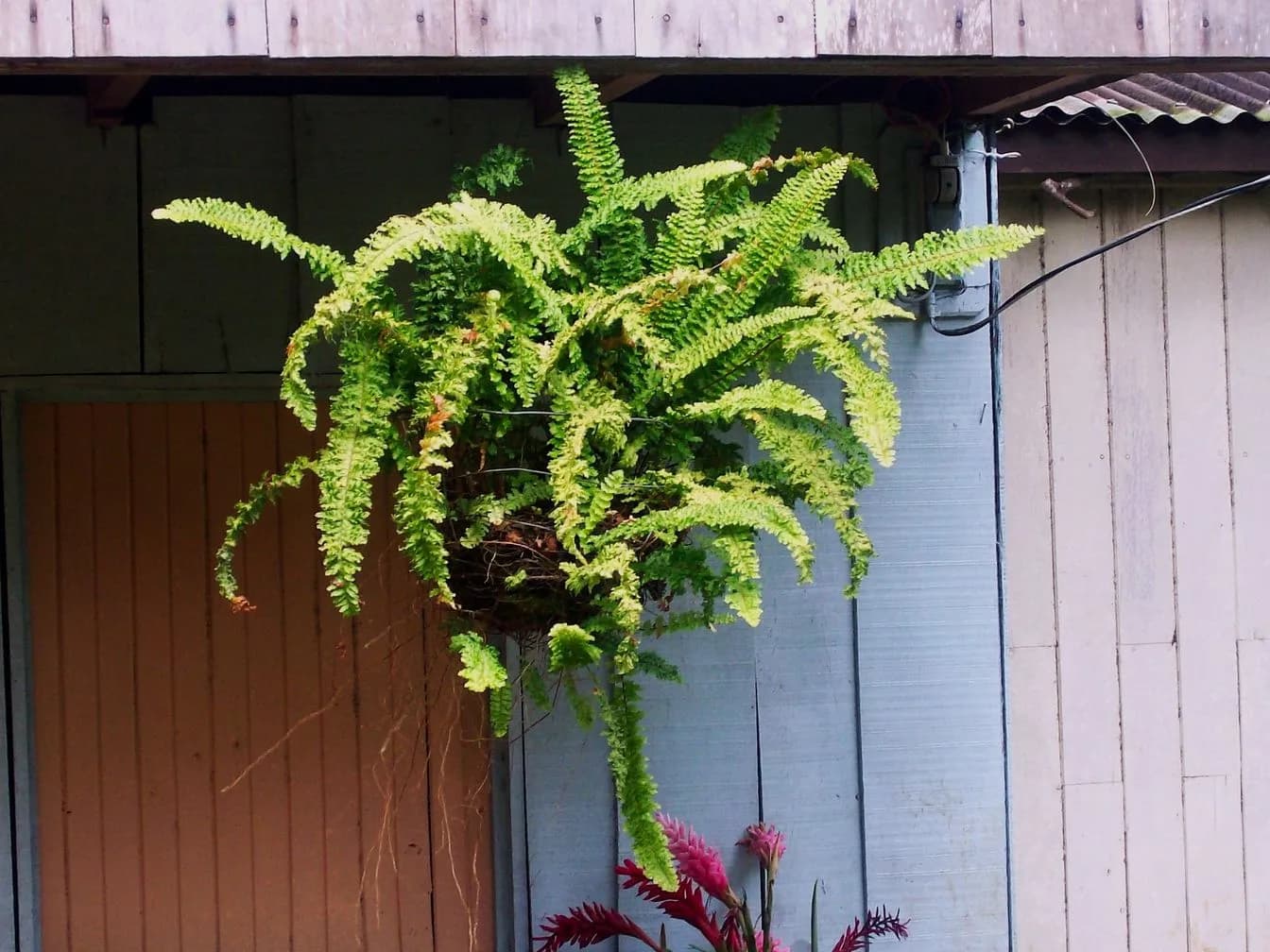
_2010.jpg)
At a glance
- Light
- Medium, indirect light
- Watering
- Every 3–5 days in summer, every 5–7 days in winter — keep the soil evenly moist, never soggy
- Humidity
- Likes high humidity
- Temperature
- 15–26 °C (59–79 °F)
- Difficulty
- Demanding
- Pets
- Non-toxic to cats and dogs
Intervals are typical indoor ranges. Your light, pot and season change them — always check the soil first. Pet safety per the ASPCA plant lists.
The Boston fern (Nephrolepis exaltata) is lush and pet-safe, but it is one of the thirstier houseplants. It comes from humid forests and wants consistent moisture — in the soil and in the air.
Light
Medium, indirect light is ideal: a bright room, out of direct sun. Direct sun turns the fronds yellow and crispy; deep shade makes it sparse.
Watering
Keep the soil evenly moist — never soggy, never dry. In summer that often means watering every 3 to 5 days, in winter every 5 to 7 days. Check with a finger: if the surface feels dry, water. A fern that dries out completely drops leaflets fast.
Soil and repotting
Use a rich, moisture-holding potting soil with some perlite. Repot in spring when roots fill the pot.
Humidity and temperature
High humidity is the key to a green fern. Place it in a bright bathroom, group it with other plants, or use a humidifier. Keep it between 15 and 26 °C and away from radiators, which dry the air.
Common problems
- Brown, crispy fronds and falling leaflets: dry air or dry soil. Raise humidity and water more consistently.
- Yellow fronds: too much sun, or waterlogged soil.
- Grey-brown, dull fronds in winter: heating air. Move it away from the radiator.
- Sparse growth: too little light.
Is a Boston fern safe for pets?
Yes. The Boston fern is listed as non-toxic to cats and dogs, which makes it a good choice for pet households.