
How to Propagate Pothos: Water or Soil, Step by Step
· 3 min read
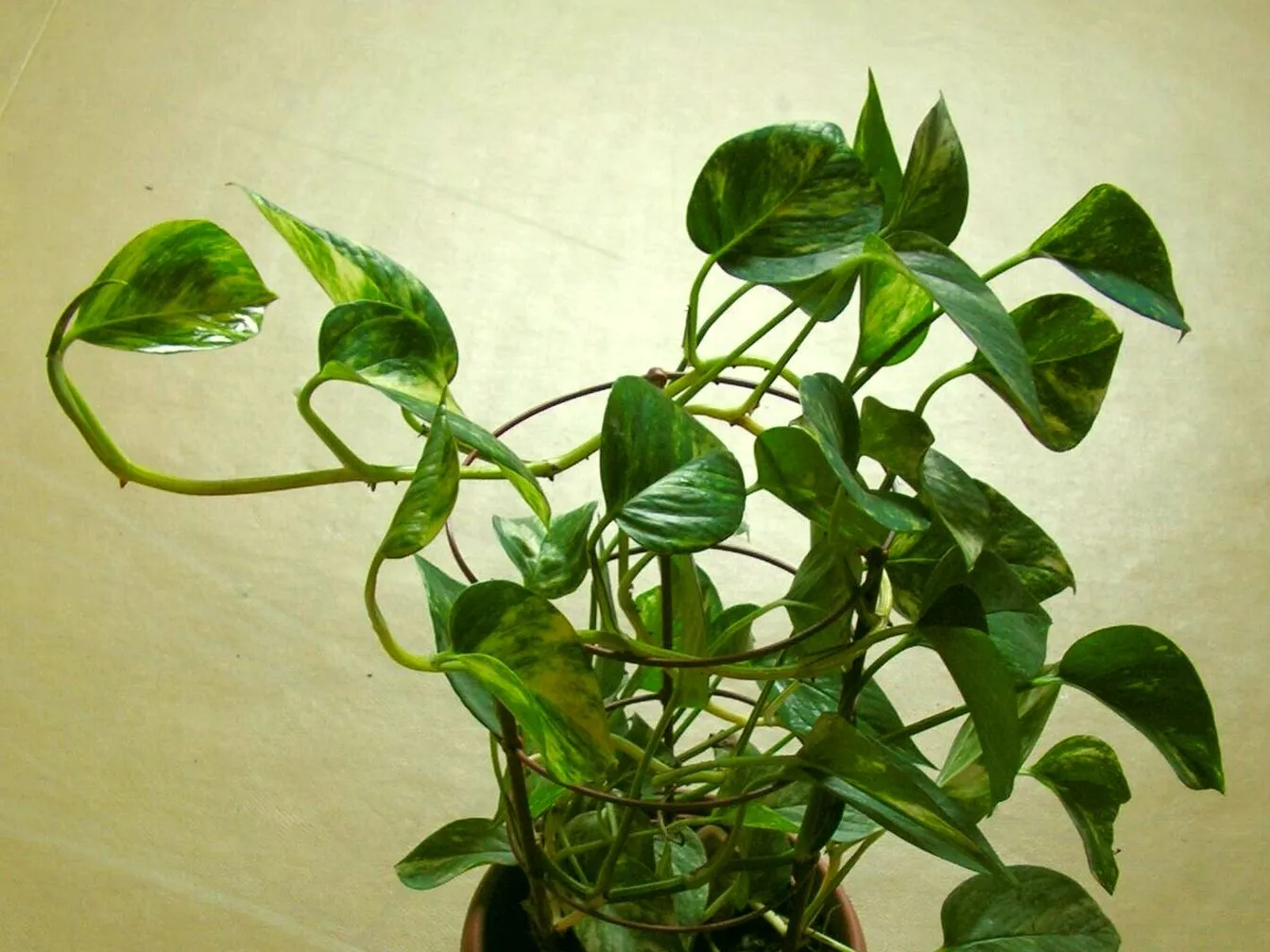

Pothos is the easiest houseplant to multiply. A cutting with a single node roots in water within a few weeks, and one long vine can become a full pot or a handful of gifts. Here is where to cut, whether to root in water or soil, how long it takes, and what to do when a cutting fails.
What You Need
- A healthy vine: any pothos variety works. Plain green ones root fastest, variegated ones are a little slower.
- Clean, sharp scissors: wipe the blades with alcohol so you do not carry rot from another plant.
- A clear jar or glass for water, or a small pot with potting mix and some perlite for soil.
- A bright spot out of direct sun, where the room stays warm.
Where to Cut
Roots grow from the node, the small brown bump on the stem where a leaf joins. A cutting without a node will never root, however long you wait. Cut about 1 cm below a node and take 10 to 15 cm of vine with 2 to 4 leaves and at least one node, two is better. Remove the leaf at the lowest node so that node can sit in water or soil. Spring and summer give the fastest results, but indoors it works all year, only slower in winter.
Rooting in Water
- Set the cutting in a jar so the lowest nodes are under water and the leaves stay above it.
- Give it bright, indirect light and keep the room at 20 to 25 °C. Direct sun heats the water and invites algae.
- Change the water every week, or sooner when it turns cloudy. Fresh water keeps the stem from rotting.
- Wait 2 to 4 weeks for white roots to appear at the node. Winter is slower, sometimes twice as long.
Rooting in Soil
Press the cutting into a moist, airy mix of potting soil and perlite, with the node buried and the leaves above the surface. Keep it lightly moist but never wet, and give it bright, indirect light. Roots take 3 to 6 weeks. A gentle tug that meets resistance, or a new leaf unfurling, tells you it has rooted. Soil roots are tougher than water roots and need no transition, but you cannot watch them grow.
When to Pot Up a Water Cutting
Move a water cutting to soil when the roots are 5 to 8 cm long and have started to branch. Plant it in a small pot with an airy mix and keep the soil evenly moist for the first two weeks, because water roots need time to adapt to soil. After that, water when the top few centimetres are dry. Waiting too long makes the shock bigger, since long water roots struggle in soil.
Making a Full Pot
For a full pot, plant three to five cuttings together in a 12 to 15 cm pot, spaced around the rim with their nodes under the soil. The pot looks bushy after a few months instead of a few years. Rooting them together in one jar works too, as long as the nodes are under water.
When It Goes Wrong
- The cutting turns mushy or black: that is rot. Cut above the damage with a clean tool, change the water and start again.
- No roots after six weeks: it is too cold or too dark, or there is no node under water. Move it somewhere warmer and brighter.
- The oldest leaf turns yellow: normal, the cutting is feeding on its own reserves. If every leaf yellows, light is too low or the stem is rotting.
- Cloudy, slimy water: bacteria. Rinse the stem and the jar and refill with fresh water.
- Roots but no new growth: be patient. New leaves come once the plant is potted and settled.
Other Plants That Root the Same Way
The same method works for heartleaf philodendron and tradescantia, which root from a node in water. Monstera also roots from a node, ideally one with a small aerial root. Spider plants grow their own plantlets that root when set in water or soil.
Pets and Sap
Pothos is toxic to cats and dogs, and that includes cuttings in a jar on the windowsill. Keep them out of reach. The sap can irritate skin, so wash your hands after taking cuttings.