
Chinese money plant care
Pilea peperomioides

At a glance
- Light
- Bright, indirect light
- Watering
- Every 7–10 days in summer, every 14–21 days in winter — when the top few cm of soil are dry
- Humidity
- Normal room humidity
- Temperature
- 12–27 °C (54–81 °F)
- Difficulty
- Easy
- Pets
- Non-toxic to cats and dogs
Intervals are typical indoor ranges. Your light, pot and season change them — always check the soil first. Pet safety per the ASPCA plant lists.
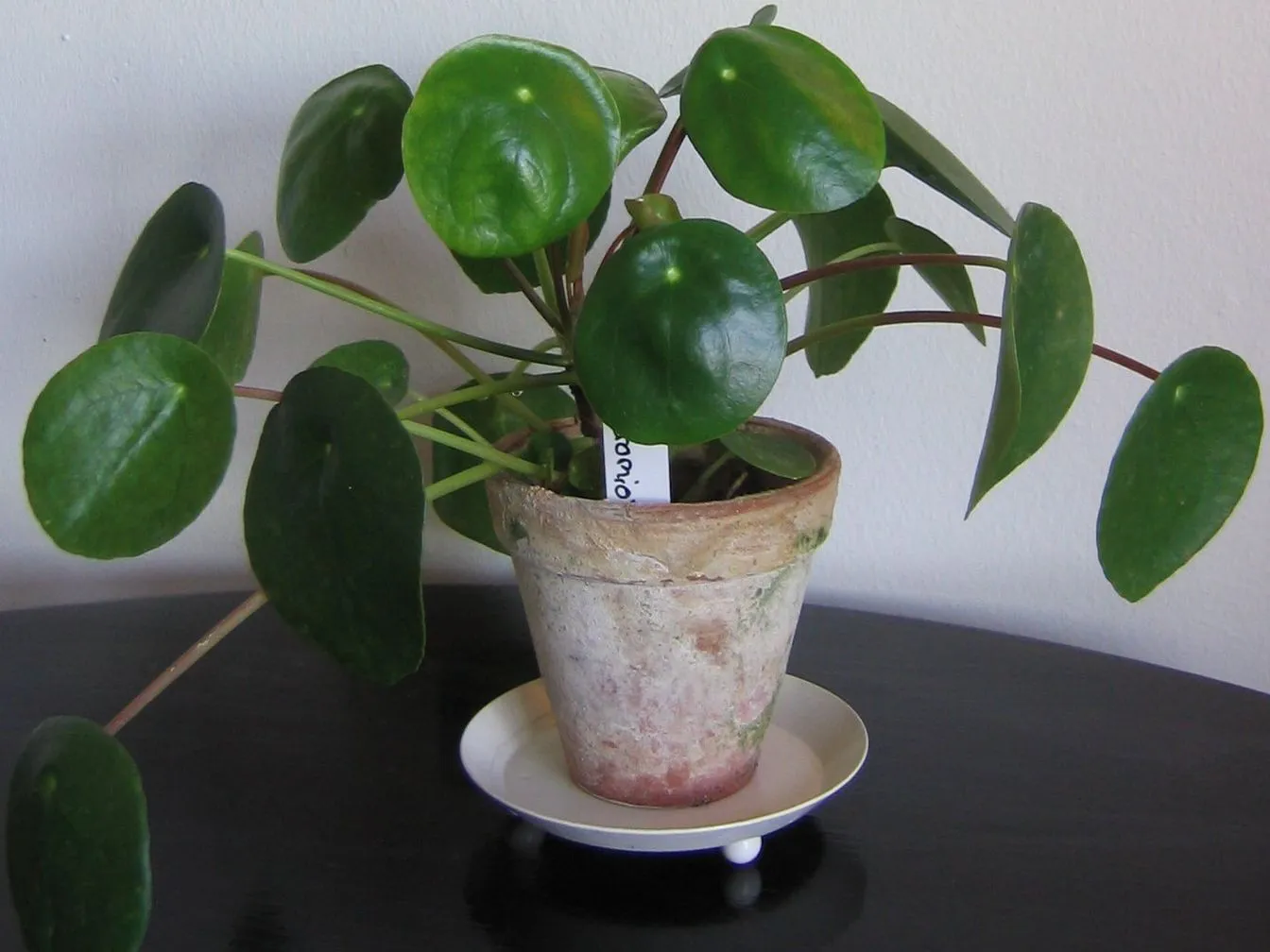
The Chinese money plant (Pilea peperomioides) has round, coin-shaped leaves on long stalks. It is easy, pet-safe and produces plenty of offshoots to share — hence its other name, the friendship plant.
Light
Bright, indirect light keeps it compact. It leans strongly toward the light, so turn the pot a quarter turn every week for an even, round shape. Direct midday sun burns the leaves; in low light the stems stretch and leaves get smaller.
Watering
Water when the top 2–3 cm of soil are dry — usually every 7 to 10 days in summer and every two to three weeks in winter. Drooping leaves are a sign it's thirsty.
Soil and repotting
Use a well-draining potting mix with perlite, in a pot with a drainage hole. Repot every year or two in spring.
Humidity and temperature
Normal room humidity is fine. It tolerates cool rooms (down to about 12 °C) and is comfortable up to 27 °C.
Propagating the pups
Healthy plants send up small pups from the soil around the main stem. Once a pup is a few centimetres tall, cut it off just below the soil and pot it on its own or root it in water.
Common problems
- Curling, domed leaves: usually too much light, sometimes too little.
- Yellow lower leaves: overwatering, or old leaves dropping naturally.
- Leggy, leaning stem: not enough light or not being turned.
- Brown spots: sunburn or overwatering.
Is a Chinese money plant safe for pets?
Yes. Pilea peperomioides is considered non-toxic to cats and dogs.