Hoya care
Hoya carnosa
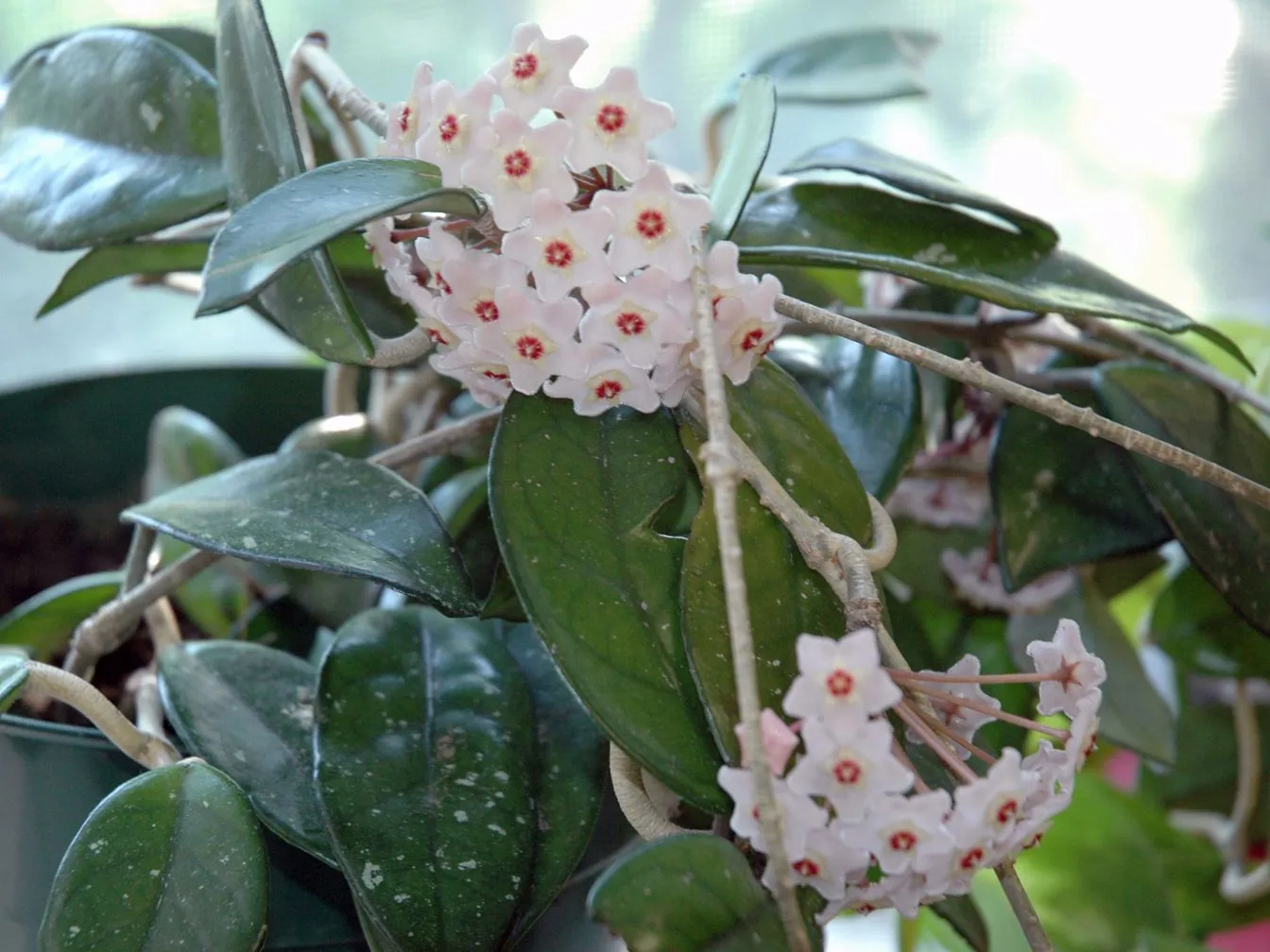
The hoya (Hoya carnosa), or wax plant, has thick, waxy leaves on long trailing stems and, once settled, clusters of star-shaped, scented flowers. It stores water in its leaves, forgives a forgotten watering and is considered non-toxic to cats and dogs.
At a glance
- LightBright, indirect light
- WateringEvery 10–14 days in summer, every 21–28 days in winter — when the soil is dry all the way through
- HumidityNormal room humidity
- Temperature12–29 °C (54–84 °F)
- DifficultyEasy
- PetsNon-toxic to cats and dogs
- Common problemsYellow leaves · Brown tips and edges · Mealybugs
Intervals are typical indoor ranges. Your light, pot and season change them — always check the soil first. Pet safety per the ASPCA plant lists.
Light
Bright, indirect light is what makes it bloom. An east window or a spot a metre or two from a south window works well. It survives in medium light but grows slowly and rarely flowers. Strong midday sun can bleach or scorch the leaves.
Not sure a spot is bright enough? Flora's Spot Finder measures the light with your phone's camera and shows which spots suit which plants. Get the app
Watering
Let the soil dry through between waterings — usually every 10 to 14 days in summer and every three to four weeks in winter. Wrinkled or soft leaves mean it is thirsty; yellow, mushy leaves mean it has had too much. When in doubt, wait a few days.
Flora reminds you when it's time to water, learns from what you actually do and adjusts through the seasons. Skip, snooze or switch on vacation mode. Get the app
Soil and repotting
Use a chunky, fast-draining mix (potting soil with plenty of perlite or bark) in a pot with a drainage hole. Hoyas flower better slightly root-bound, so repot only every two to three years, into a pot just one size larger.
Humidity and temperature
Normal room humidity is fine, though a little extra helps buds develop. Keep it between about 12 °C and 29 °C and away from cold drafts.
Making it bloom
Give it bright light, let it rest a little drier in winter and keep it in the same spot once buds form. Never cut off the short, leafless stalks after the flowers fade: the same spur flowers again, year after year.
Common problems
- Yellow, soft leaves: overwatering; check the roots and let the soil dry out.
- Wrinkled leaves: underwatering, or roots that have rotted and can't drink.
- Long stems with small, widely spaced leaves: not enough light.
- Brown, dry leaf edges: sunburn or very dry air next to a heater.
- No flowers: too little light, or the flower spurs were cut off.
Is your hoya healthy? Photograph it with Flora: you get a health check and a watering schedule that adapts to your light, your season and your weather. Get the app
Is a hoya safe for pets?
Yes. Hoya carnosa is listed as non-toxic to cats and dogs by the ASPCA.