Air plant care
Tillandsia
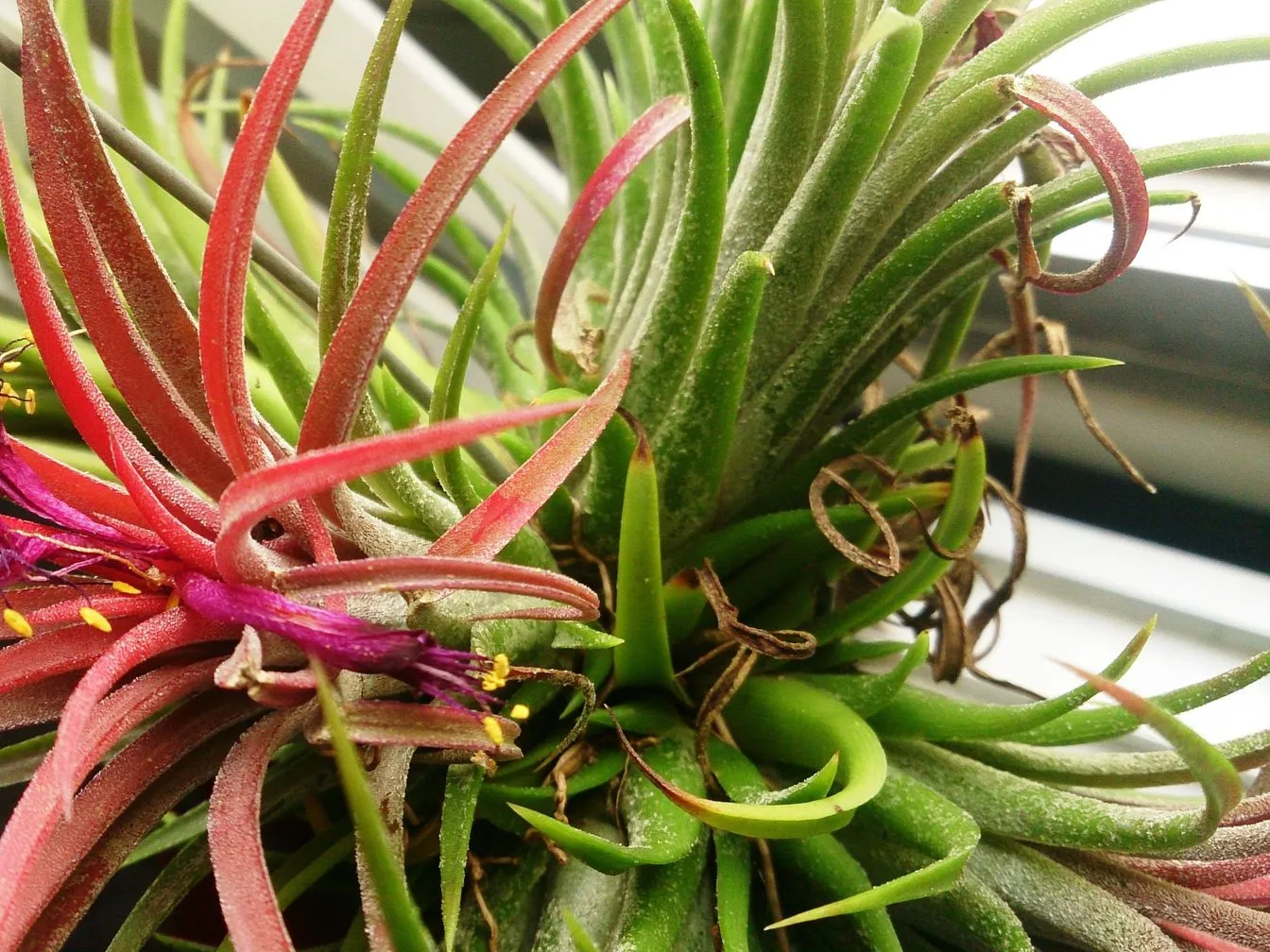
Air plants (Tillandsia) grow without soil, taking water and nutrients in through their leaves. That makes them easy to display and surprisingly easy to lose: most indoor air plants die slowly from too little water, and the rest rot after too much. The routine below avoids both.
At a glance
- LightBright, indirect light
- WateringEvery 7–10 days in summer, every 10–14 days in winter — soak the whole plant, then make sure it dries within about 4 hours
- HumidityNormal room humidity
- Temperature10–30 °C (50–86 °F)
- DifficultyModerate
- PetsNon-toxic to cats and dogs
- Common problemsBrown tips and edges · Leggy growth
Intervals are typical indoor ranges. Your light, pot and season change them — always check the soil first. Pet safety per the ASPCA plant lists.
Light
Bright, indirect light is best, for example a spot a metre from a south window or right beside an east or west one. Direct midday sun burns the leaves behind glass. Low light slows growth and the plant fades over months. Silver, fuzzy species such as T. xerographica take more light than green, smooth ones.
Not sure a spot is bright enough? Flora's Spot Finder measures the light with your phone's camera and shows which spots suit which plants. Get the app
Watering
Soak the whole plant in room-temperature water for 20 to 30 minutes about once a week in summer and every 10 to 14 days in winter. Then shake out the water and let the plant dry upside down on a towel in bright air. It should be dry within about 4 hours, because water trapped between the leaves at the base is what causes rot. Misting alone rarely gives enough water indoors; use it as a top-up between soaks in dry air, not as the only method. Rainwater or filtered water is gentler than very hard tap water.
Flora reminds you when it's time to water, learns from what you actually do and adjusts through the seasons. Skip, snooze or switch on vacation mode. Get the app
Fertiliser
Once a month in the growing season, add a very diluted fertiliser made for air plants or bromeliads to the soaking water. Skip it in winter. Plants that bloom need no extra feeding.
Mounting and display
Air plants do not need soil, but they do need air moving around them. Lay them on stones, hang them in an open holder or glue them to bark. Avoid closed glass globes, which hold humidity and invite rot, and never leave one sitting wet in a shell or dish. Copper wire and pressure-treated wood are best avoided too, since copper (used in many wood preservatives) can harm the plant.
Humidity and temperature
Normal room humidity is fine, and a bright bathroom suits them. Keep them between 10 and 30 °C, away from frost and from heater vents.
Flowers and pups
Most air plants flower once, usually in a bright colour that lasts weeks. After flowering, the mother plant slowly declines and grows small pups at the base. Keep caring for it, and when the pups are about a third of the mother's size, twist them off to grow on their own or leave them as a clump.
Common problems
- Brown, dry leaf tips: thirst. Soak a little longer or a little more often.
- Leaves curling inward or rolled lengthwise: dehydration. Soak for an hour, then dry.
- Soft, brown or black base, leaves falling out of the centre: rot, from water that stayed in the crown. Remove loose leaves, make sure it dries within 4 hours after every soak and improve airflow.
- Pale, stretched, shrinking plant: too little light. Move it to a brighter spot.
- Leaves that look scorched or bleached: too much direct sun.
Is your air plant healthy? Photograph it with Flora: you get a health check and a watering schedule that adapts to your light, your season and your weather. Get the app
Is an air plant safe for pets?
Yes. Tillandsia is listed as non-toxic to cats and dogs. A chewed plant will not poison a pet, but it will not survive for long, so hang or place it where a curious cat cannot reach.