Fiddle leaf fig care
Ficus lyrata
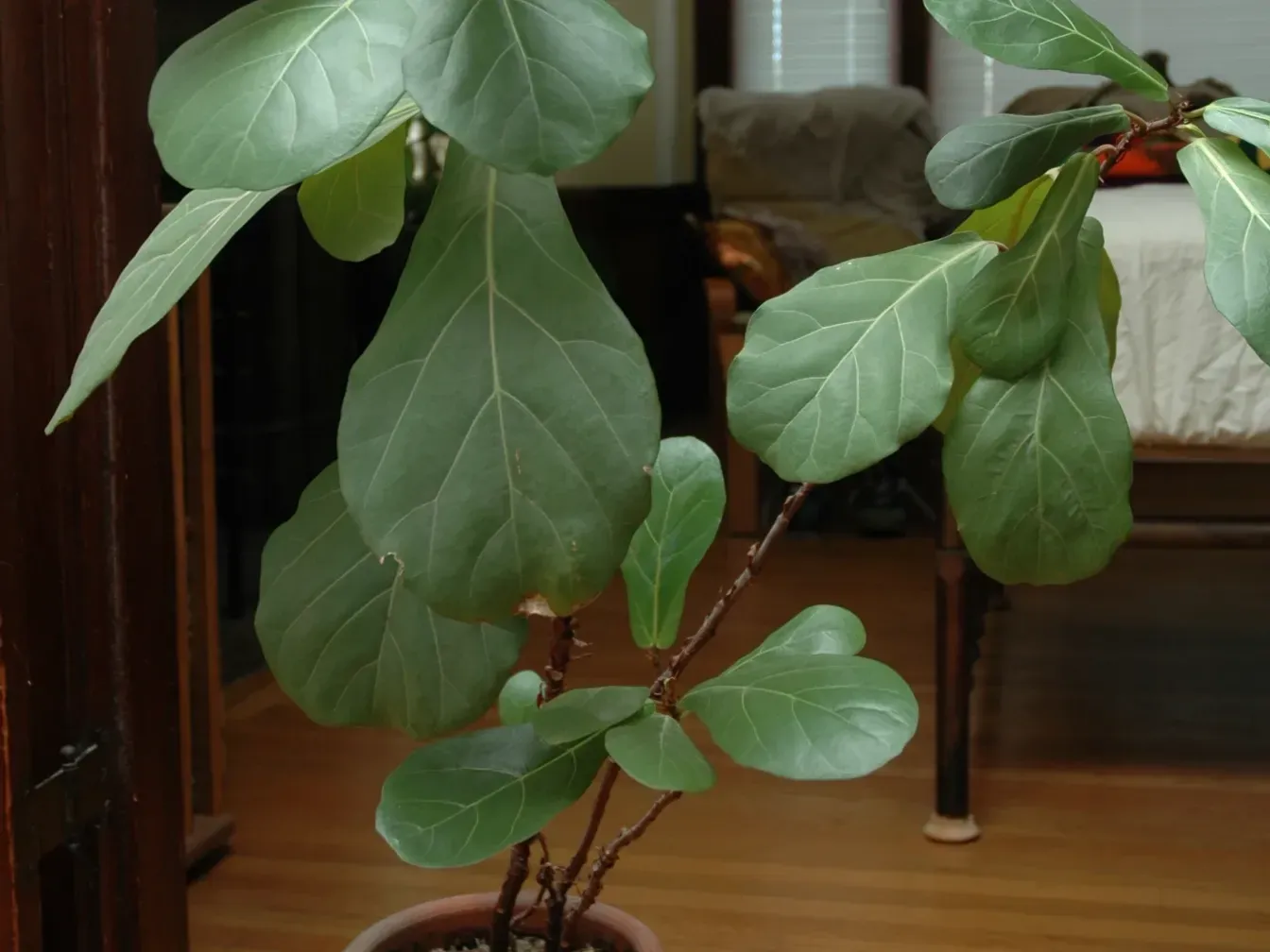
The fiddle leaf fig (Ficus lyrata) has a reputation for being dramatic. It isn't fragile so much as particular: give it lots of light, consistent watering and a spot it can stay in, and it grows into a striking tree.
At a glance
- LightBright, indirect light
- WateringEvery 7–10 days in summer, every 14–21 days in winter — when the top few cm of soil are dry
- HumidityNormal room humidity
- Temperature16–27 °C (61–81 °F)
- DifficultyDemanding
- PetsToxic to cats and dogs
- Common problemsBrown tips and edges · Leaf drop · Spider mites · Scale insects
Intervals are typical indoor ranges. Your light, pot and season change them — always check the soil first. Pet safety per the ASPCA plant lists.
Light
It needs bright light — directly in front of a large east, south or west window. A few hours of gentle direct sun are welcome. In medium light it stops growing and starts dropping lower leaves. Turn it a quarter turn every few weeks so it grows straight.
Not sure a spot is bright enough? Flora's Spot Finder measures the light with your phone's camera and shows which spots suit which plants. Get the app
Watering
Water when the top 5 cm of soil are dry — often every 7 to 10 days in summer and every two to three weeks in winter. Water thoroughly until it drains, then let it dry again. Both extremes cause brown spots, so consistency matters more than the exact interval.
Flora reminds you when it's time to water, learns from what you actually do and adjusts through the seasons. Skip, snooze or switch on vacation mode. Get the app
Soil and repotting
Use a well-draining potting mix with perlite or bark, in a pot with drainage holes. Repot every year or two in spring, only one size up.
Humidity and temperature
Average humidity is fine. Keep it between 16 and 27 °C, and away from drafts, air-conditioning and radiators.
Leaf drop after moving
Fiddle leaf figs dislike change. After you bring one home or move it, losing a few leaves is normal. Pick a bright spot and leave it there.
Common problems
- Brown spots in the middle of leaves, spreading from below: overwatering and root rot.
- Crispy brown edges: underwatering or dry air.
- Dropping leaves: a move, a draft, or too little light.
- Small red-brown dots on new leaves: edema from uneven watering — usually harmless and fades.
Is your fiddle leaf fig healthy? Photograph it with Flora: you get a health check and a watering schedule that adapts to your light, your season and your weather. Get the app
Is a fiddle leaf fig safe for pets?
No. Like other figs, its sap is irritating, and it is listed as toxic to cats and dogs, causing mouth irritation, drooling and vomiting.