
Bird of paradise care
Strelitzia reginae
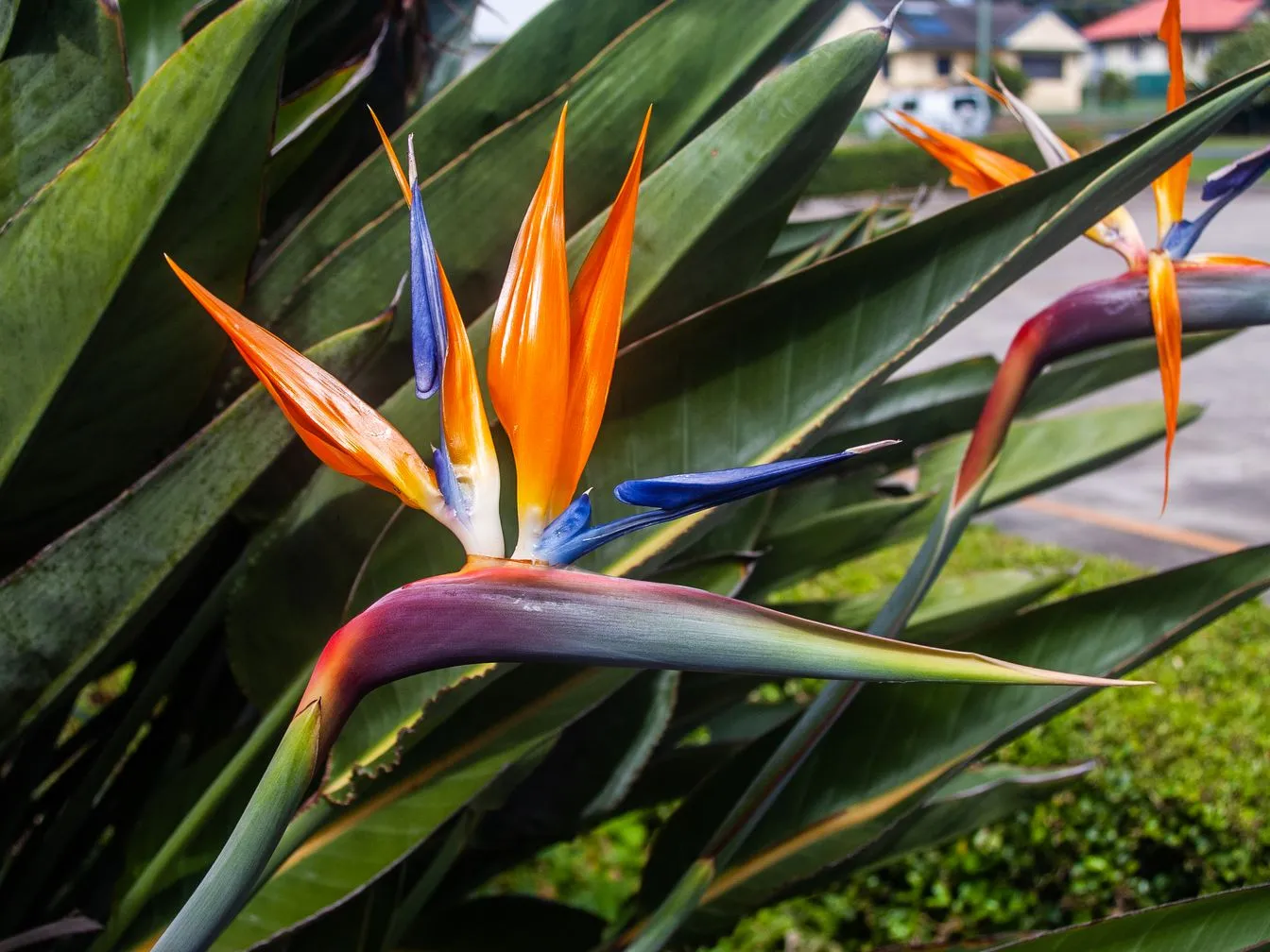

At a glance
- Light
- Bright light with direct sun
- Watering
- Every 7–10 days in summer, every 14–21 days in winter — when the top few cm of soil are dry
- Humidity
- Normal room humidity
- Temperature
- 12–29 °C (54–84 °F)
- Difficulty
- Moderate
- Pets
- Toxic to cats and dogs
Intervals are typical indoor ranges. Your light, pot and season change them — always check the soil first. Pet safety per the ASPCA plant lists.
The bird of paradise (Strelitzia reginae) grows large, paddle-shaped leaves and — with enough sun — orange and blue flowers that look like a bird's head. Indoors, light is the deciding factor.
Light
Give it your brightest spot: a large south- or west-facing window with several hours of direct sun. In medium light it survives but grows slowly and won't flower. It happily spends summer outdoors once nights stay above about 12 °C.
Watering
Water when the top 5 cm of soil are dry — about every 7 to 10 days in summer and every two to three weeks in winter. Water thoroughly and don't let it stand in water.
Soil and repotting
Use a rich, well-draining potting mix. Young plants grow fast and need repotting every spring; mature plants flower better when slightly root-bound.
Humidity and temperature
Average humidity is fine. Keep it between 12 and 29 °C.
Flowering
Indoor plants usually flower only once they are several years old and get plenty of direct sun. Feeding every two to four weeks in spring and summer helps.
Common problems
- Split leaves: natural — the leaves split to let wind through. Dry air makes it worse.
- Curling leaves: thirst or dry air.
- Brown, crispy edges: underwatering or very dry air.
- Yellow leaves: overwatering.
Is a bird of paradise safe for pets?
No. Strelitzia reginae is listed as toxic to cats and dogs; the seeds and flowers can cause nausea and vomiting.